
Gallery
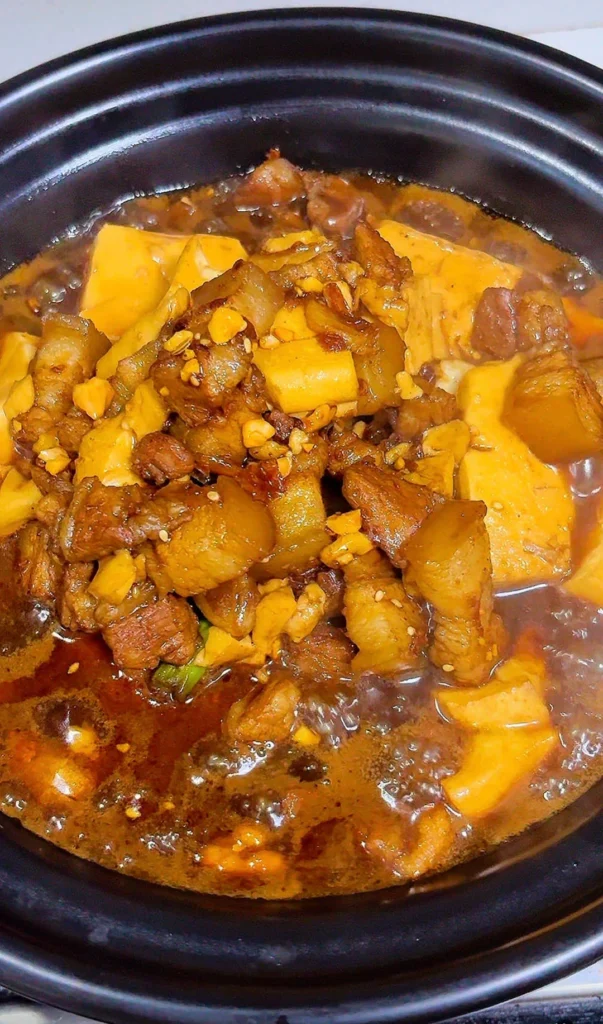
Home-Style Braised Pork Belly (No Blanching, No Oil)
Chinese dish ready in 37 min using intermediate-level technique. Take your time with the prep for the best results.
- Prep
- 36m
- Cook
- 1m
- Total
- 37m
- Servings
- 2
- Difficulty
- Intermediate
- Spice
- 1/5
- Cuisine
- Chinese
IngredientsWhat you'll need for Home-Style Braised Pork Belly (No Blanching, No Oil)
| Ingredient | Amount |
|---|---|
| skin-on pork belly | 700g |
| rock sugar | 10 or so small pieces |
| ginger slices | 4 as needed |
| star anise | 1-2 |
| bay leaves | 2-3 |
| dried chili | 1 as needed |
| Shaoxing wine (huangjiu) | 2 as needed |
| dark soy sauce | 2 as needed |
| light soy sauce | 2 as needed |
| boiling water | enough to cover the meat |
- skin-on pork belly700g
- rock sugar10 or so small pieces
- ginger slices4 as needed
- star anise1-2
- bay leaves2-3
- dried chili1 as needed
- Shaoxing wine (huangjiu)2 as needed
- dark soy sauce2 as needed
- light soy sauce2 as needed
- boiling waterenough to cover the meat
Cooking StepsHow to cook Home-Style Braised Pork Belly (No Blanching, No Oil) step by step
-
 Step 1
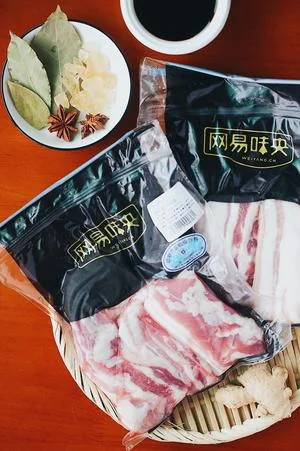
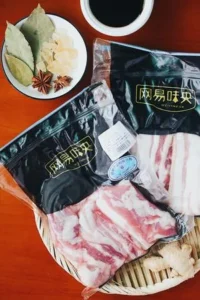
Prepare all the ingredients. If using frozen pork belly, thaw it beforehand. Slice the ginger. Note: dark soy sauce is for color, light soy sauce is for seasoning. If your household only uses one type of soy sauce, that works too — just adjust accordingly. There are also specialized braising soy sauces available. Keep in mind that different soy sauces vary in color and saltiness, so be flexible. This recipe provides one approach to the method.
-
Step 2
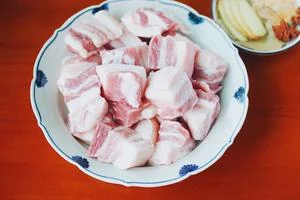
Choose skin-on pork belly. Wash it thoroughly, changing the water several times until no more blood seeps out. Drain well — ideally pat the surface dry with paper towels. Cut into mahjong-tile-sized pieces. This is a good time to start boiling a kettle of water — you’ll need boiling water for braising later.
-
 Step 3
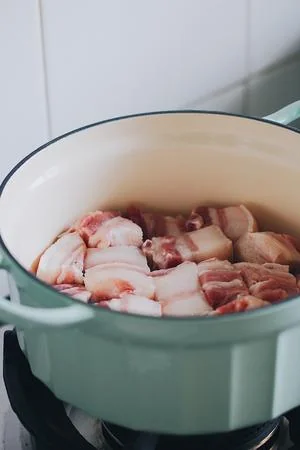
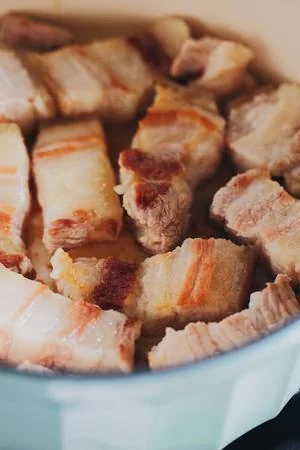
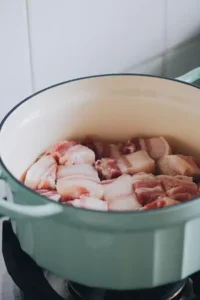
Heat the wok first — no oil needed. Place the pork belly pieces in, trying not to overlap. Each piece should sit flat against the pan. Don’t rush to flip them — at first they will stick. Cook over low heat; once the fat renders, they’ll release naturally.
-
 Step 4
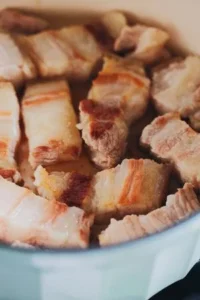
Keep the heat low and use chopsticks to flip each piece until the surfaces are lightly golden and the fat has rendered out. Don’t sear too long or the meat will toughen. This is similar to the Western technique of searing meat to create a Maillard crust that seals in juices.
-
 Step 5
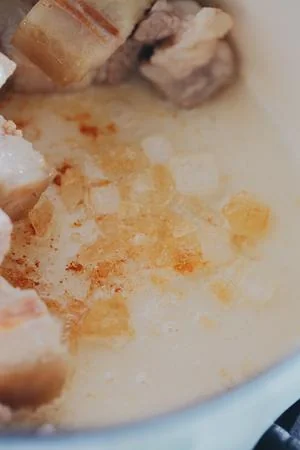
Add the rock sugar, placing it where there’s the most rendered fat. Toss briefly over low heat, then stir together with all the meat. Use small rock sugar pieces — break larger chunks first or they won’t melt easily. This is similar to caramelizing sugar, but not quite the full traditional method. If you want a proper caramel, remove the meat first, leave the fat in the pan, add the sugar and stir constantly over low heat until fully melted and bubbling, then return the meat and toss quickly to coat. Be careful not to over-caramelize — it will turn bitter. My approach is simpler: add the sugar directly with the meat still in the pan. The finished dish is just as glossy and richly colored.
-
 Step 6
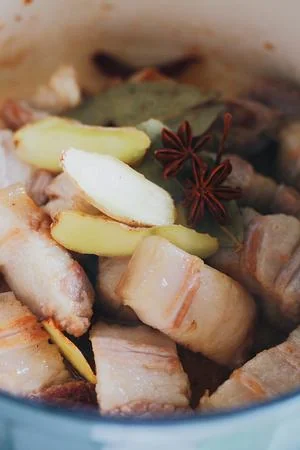
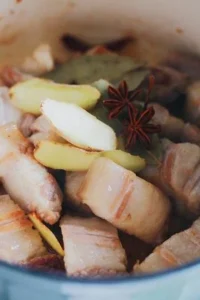
Once the sugar has mostly melted, add the ginger slices, star anise, bay leaves, and dried chili. Toss a few times. The dried chili is entirely optional, but I find a hint of heat helps cut through the richness. Star anise and bay leaves are also optional — some households skip them. I like a touch of warm spice, so I include them, but never too much.
-
 Step 7
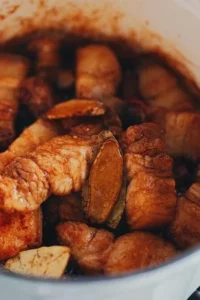
Pour in the Shaoxing wine — we use Shaoxing huadiao wine at home, a type of yellow wine. Regular cooking wine works if you don’t have it. The wine hitting the hot pan will release a wonderful aroma. Then add the dark and light soy sauces. Toss until every piece is evenly coated.
-
 Step 8
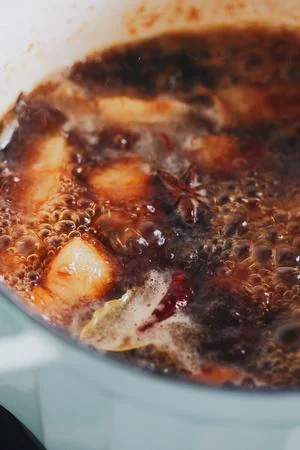
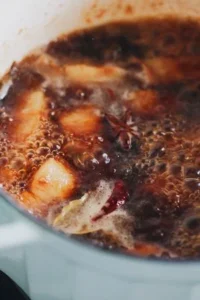
Pour in boiling water — at least enough to submerge the meat. It must be boiling water, never cold. Hot meat hitting cold water will seize and toughen. After adding the water, bring to a boil over high heat, then reduce to low, cover, and braise for 40 minutes to 1 hour. Check occasionally — if the liquid runs low but the meat isn’t tender yet, add more boiling water as needed.
-
 Step 9
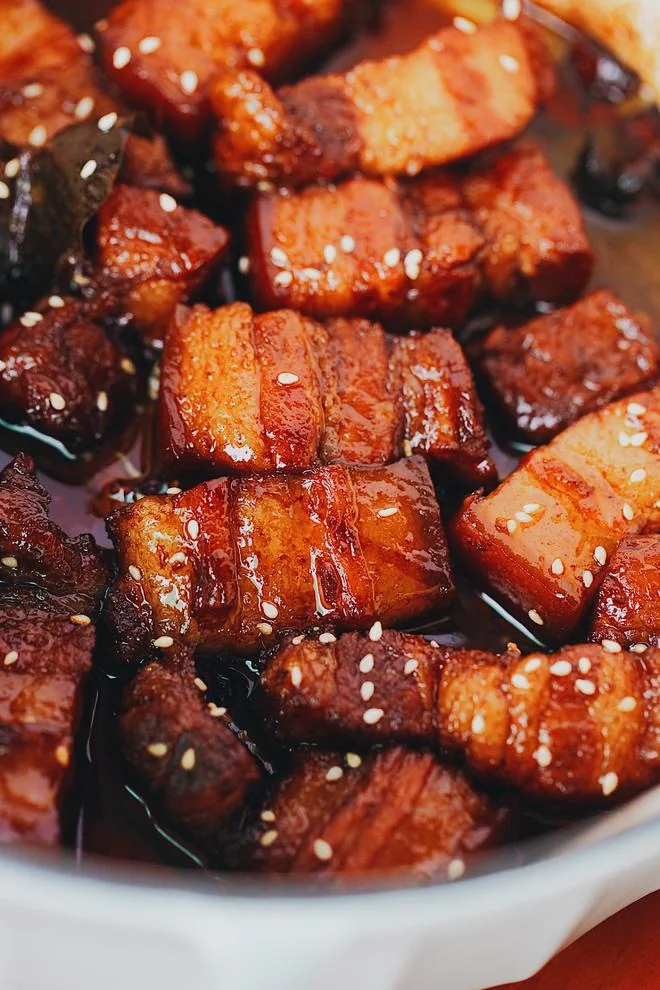
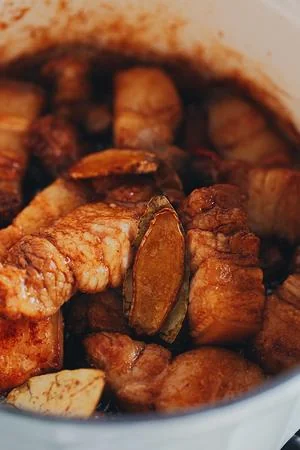
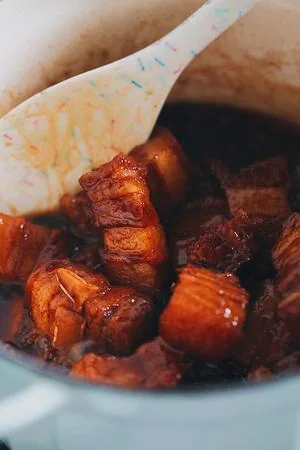
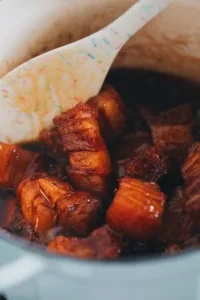
After braising, taste for seasoning and check the meat’s tenderness. If it needs more time, keep going — but usually it’s ready. Uncover, turn the heat up to high, and reduce the sauce. Stir frequently while reducing — the sugar in the sauce will thicken it. More sugar means a thicker, glossier finish. Reduce until the sauce coats the meat nicely, but don’t cook it dry. Once the water truly evaporates, only oil remains and the meat will fry and turn tough. Stop when the sauce is still a rich, soy-colored glaze. Garnish with sesame seeds for a beautiful presentation.
Home-Style Braised Pork Belly (No Blanching, No Oil)
Chinese dish ready in 37 min using intermediate-level technique. Take your time with the prep for the best results.
Ingredients
- 700g skin-on pork belly
- 10 or so small pieces rock sugar
- 4 as needed ginger slices
- 1-2 star anise
- 2-3 bay leaves
- 1 as needed dried chili
- 2 as needed Shaoxing wine (huangjiu)
- 2 as needed dark soy sauce
- 2 as needed light soy sauce
- enough to cover the meat boiling water
Instructions
-
Prepare all the ingredients. If using frozen pork belly, thaw it beforehand. Slice the ginger. Note: dark soy sauce is for color, light soy sauce is for seasoning. If your household only uses one type of soy sauce, that works too — just adjust accordingly. There are also specialized braising soy sauces available. Keep in mind that different soy sauces vary in color and saltiness, so be flexible. This recipe provides one approach to the method.
-
Choose skin-on pork belly. Wash it thoroughly, changing the water several times until no more blood seeps out. Drain well — ideally pat the surface dry with paper towels. Cut into mahjong-tile-sized pieces. This is a good time to start boiling a kettle of water — you’ll need boiling water for braising later.
-
Heat the wok first — no oil needed. Place the pork belly pieces in, trying not to overlap. Each piece should sit flat against the pan. Don’t rush to flip them — at first they will stick. Cook over low heat; once the fat renders, they’ll release naturally.
-
Keep the heat low and use chopsticks to flip each piece until the surfaces are lightly golden and the fat has rendered out. Don’t sear too long or the meat will toughen. This is similar to the Western technique of searing meat to create a Maillard crust that seals in juices.
-
Add the rock sugar, placing it where there’s the most rendered fat. Toss briefly over low heat, then stir together with all the meat. Use small rock sugar pieces — break larger chunks first or they won’t melt easily. This is similar to caramelizing sugar, but not quite the full traditional method. If you want a proper caramel, remove the meat first, leave the fat in the pan, add the sugar and stir constantly over low heat until fully melted and bubbling, then return the meat and toss quickly to coat. Be careful not to over-caramelize — it will turn bitter. My approach is simpler: add the sugar directly with the meat still in the pan. The finished dish is just as glossy and richly colored.
-
Once the sugar has mostly melted, add the ginger slices, star anise, bay leaves, and dried chili. Toss a few times. The dried chili is entirely optional, but I find a hint of heat helps cut through the richness. Star anise and bay leaves are also optional — some households skip them. I like a touch of warm spice, so I include them, but never too much.
-
Pour in the Shaoxing wine — we use Shaoxing huadiao wine at home, a type of yellow wine. Regular cooking wine works if you don’t have it. The wine hitting the hot pan will release a wonderful aroma. Then add the dark and light soy sauces. Toss until every piece is evenly coated.
-
Pour in boiling water — at least enough to submerge the meat. It must be boiling water, never cold. Hot meat hitting cold water will seize and toughen. After adding the water, bring to a boil over high heat, then reduce to low, cover, and braise for 40 minutes to 1 hour. Check occasionally — if the liquid runs low but the meat isn’t tender yet, add more boiling water as needed.
-
After braising, taste for seasoning and check the meat’s tenderness. If it needs more time, keep going — but usually it’s ready. Uncover, turn the heat up to high, and reduce the sauce. Stir frequently while reducing — the sugar in the sauce will thicken it. More sugar means a thicker, glossier finish. Reduce until the sauce coats the meat nicely, but don’t cook it dry. Once the water truly evaporates, only oil remains and the meat will fry and turn tough. Stop when the sauce is still a rich, soy-colored glaze. Garnish with sesame seeds for a beautiful presentation.
Recipe Details
Common Questions
What's the most common mistake to avoid?
The biggest mistake is not having all ingredients prepped and measured before you start cooking (mise en place). Chinese cooking moves fast — once the wok is hot, there’s no time to chop.
How can I make this spicier?
Add chili oil or chili crisp to taste, or include dried red chilies during cooking. A dash of Sichuan peppercorn adds a different kind of heat.