
Starch-coating chicken
上浆shàng jiāng
Prepare a thin coating before cooking chicken for a stir-fry.
Core cooking technique
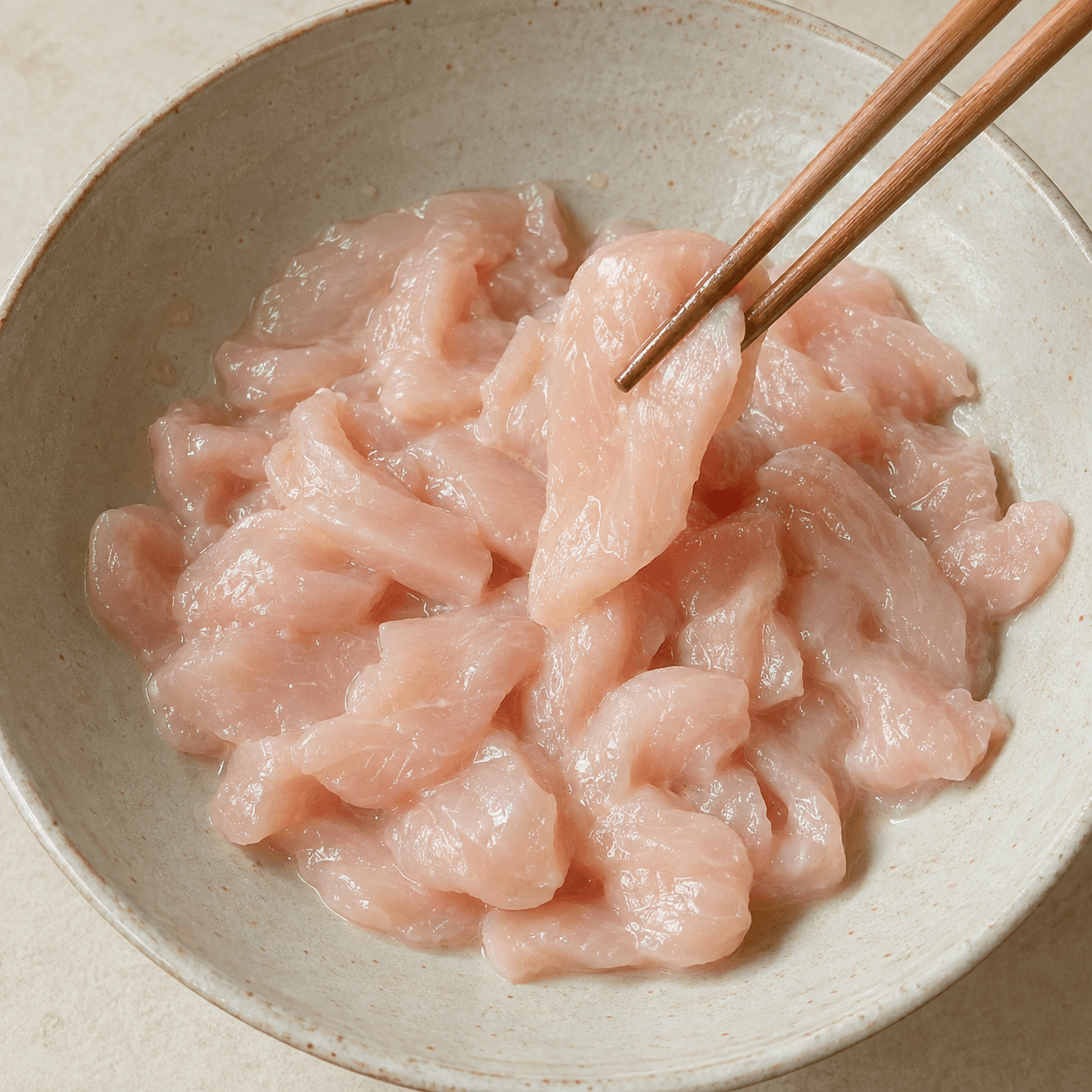
Before you start
For 12 oz (340 g) chicken: 2 tsp soy sauce, 2 tsp cornstarch, 2 tsp neutral oil, and 2–3 tbsp water; reduce water if the meat is already moist.
For this method
An example for sliced chicken, not a universal formula for every protein.
Step by step
Slice evenly
Cut across the grain, about ¼ inch thick.
Look for: Pieces of similar thickness.
Let the liquid absorb
Mix chicken with water and soy sauce. Allow 5–10 minutes for absorption.
Look for: No standing liquid.
Coat the slices
Mix in cornstarch and oil, separating the pieces.
Look for: A thin, even coating, without dry starch pockets.
Continue with your recipe
Cook the coated chicken using the recipe's searing or water-cooking method, then finish the dish. This page ends at the coating stage; cooking happens in your recipe.
Look for: Evenly coated slices, ready for the recipe's next step; nothing has been cooked yet.
Signs of success
The coating is evenly distributed. The chicken is still raw at this stage; it must later reach 165°F (74°C), checked with a food thermometer. Turning opaque during a preliminary cook does not prove that it is safe to eat.
Troubleshooting
- Liquid remains in the bowl
- The added water exceeded what this chicken absorbed.
- Pause before adding more; reduce the initial water next time.
- Coating is patchy
- Slices stuck together while mixing.
- Separate them and redistribute the coating.
About this method
English-language 'velveting' often includes marinating and pre-cooking. This page isolates the starch-coating preparation stage; the original URL is retained.
Sources & method notes
- How to Velvet Chicken for Stir-fry (opens in a new tab)
Bill Leung / The Woks of Life · Updated June 20, 2025; The Marinade; Instructions
Chicken quantities, liquid absorption, coating and later cooking. This author's method omits egg white; other methods differ. Troubleshooting is editorial interpretation of the coating instructions.
Accessed 2026-09-05
- Safe minimum internal temperatures (opens in a new tab)
FoodSafety.gov · Poultry
Chicken must reach 165°F (74°C), measured with a food thermometer. Appearance alone is not a safety test.
Accessed 2026-09-05