

Pork Cuts Guide: Understanding Different Cuts and Best Cooking Methods
Ingredients
- 1 Pork belly
Instructions
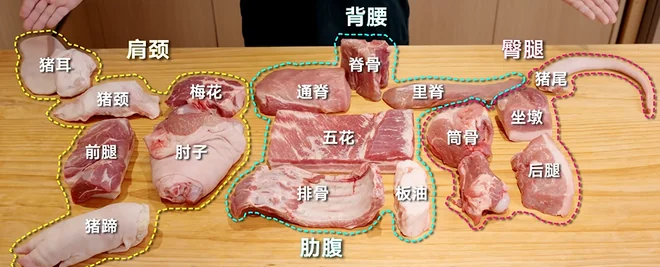
- Both the front leg and hind leg have separated lean and fat portions. The front leg has finer muscle fibers than the hind leg, making it relatively more tender. Both cuts are suitable for stir-frying, as well as braising and stewing — they serve as a more affordable alternative to pork belly. Thanks to their balanced fat-to-lean ratio, they also work well for ground pork filling.
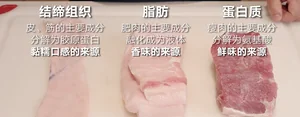
- Protein can be loosely understood as pure lean meat — when broken down, it becomes amino acids, the source of pork’s umami flavor. Cuts like tenderloin and loin are high in protein, around 20%. When muscle fibers contract, they squeeze out moisture and the meat becomes dry, so lean cuts demand careful heat control — overcooking or using too high heat will make them tough. Fat can be understood as the fatty portions — pork belly, pork neck, and tail are all high-fat cuts. Fat’s most important role is providing pork’s signature aroma and richness. Fatty cuts are better suited to pan-frying and grilling, and hold up well to long cooking times. Connective tissue can be understood as tendons and silver skin — it provides gelatin. Pork skin is also a type of connective tissue. When connective tissue melts, it becomes the collagen we all know. Breaking down connective tissue requires heat, time, and moisture — all three are essential. This is why cuts rich in connective tissue generally need longer cooking times.
- Pork collar (plum blossom meat) has abundant connective tissue, so it won’t fully soften during quick stir-frying — instead it develops a pleasantly crisp-chewy texture. Dishes like char siu and sweet-and-sour pork take advantage of this characteristic. Pork collar is also the best choice for Japanese-style tonkatsu and Hong Kong-style deep-fried pork chops. It’s equally well-suited for Chinese white-cut pork or Western-style slow-roasted pork.
- Pork neck is the most unique cut — each pig only yields two small pieces, earning it the nickname “golden six ounces.” It has a very high fat content with beautiful marbling, making it especially suited for pan-frying and grilling. The connective tissue within provides a crisp, snappy texture. At home, simply season with a bit of salt and pepper, sear until golden, then slice into bite-sized pieces.
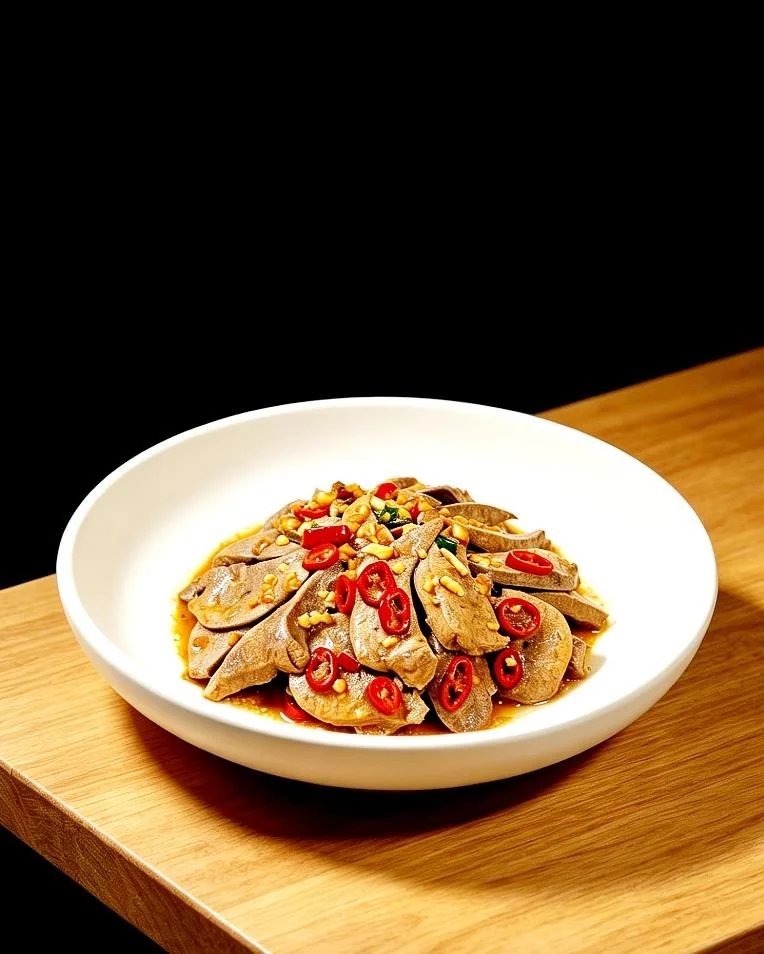
- Bones themselves are fairly flavorless, but they contain abundant bone collagen. The top choice for bone broth is the hind leg bone, also known as marrow bone. When the collagen melts into the soup, it creates a rich, full-bodied mouthfeel. However, don’t use bare bones alone — there should still be some meat attached, or add lean meat separately to provide amino acids for umami flavor. Bone marrow is essentially pure fat, which gives the broth its porky aroma. The front leg bone is also called fan bone. Hot pig ears have a wonderfully sticky, tender texture and are delicious — they’re great stir-fried with chili peppers or served as warm braised ears.
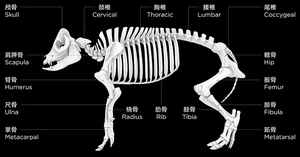
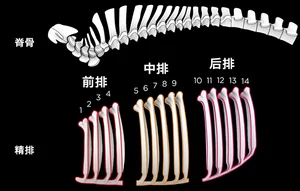
- The front ribs have flatter bones. The downside is that the rib portion is quite short, so when chopped they’re irregular in shape — but since they’re near the pork collar, the meat is well-marbled with excellent flavor. The center ribs have the longest, most uniform bones and are the classic, premium rib cut with outstanding meat quality — but they’re also the most expensive. The back ribs are similarly long but tend to have a higher proportion of lean meat, which may lack richness. Soft bone ribs don’t have the classic rib shape but offer wonderful textural contrast. Back ribs tend to dry out with braising methods and are better suited for soups. Front ribs, center ribs, and soft bone ribs are all great for braising, deep-frying with vegetables, or steaming. Sweet-and-sour ribs and garlic ribs are best made with center ribs. The spine can also be divided into three sections: the front section is the cervical vertebrae, which being near the pork collar is also called “plum blossom bone”; the rear section is the lumbar vertebrae; the middle section, adjacent to the premium rib cuts, can be split in several ways — cut together with the ribs to make tomahawk pork chops; with the ribs removed, it becomes a bone-in pork chop (note that this cut is actually loin, not true ribs — be mindful of cooking time and heat to avoid toughness); with the loin removed, what remains is the thoracic spine, also called “rib edge.” Beyond the bone-in loin variation, the spine sections are generally prepared similarly — stewing and braising, making soup, or braising with vegetables. They also work well for soy-braised preparations. In Northeast China, there’s a specialty technique called “xun jiang” — first braised, then smoked — which is absolutely delicious.