Classic Braised Pork Belly (No Blanching, No Oil)
Ingredients
- 700g Pork Belly with Skin
- 10-12 small pieces Rock Sugar
- 4 slices Ginger Slices
- 1-2 (optional) Star Anise
- 2-3 (optional) Bay Leaves
- 1 (optional) Dried Chili
- 2 tbsp Yellow Rice Wine
- 2 tbsp Dark Soy Sauce
- 2 tbsp Light Soy Sauce
- enough to cover the meat Boiling Water
Instructions
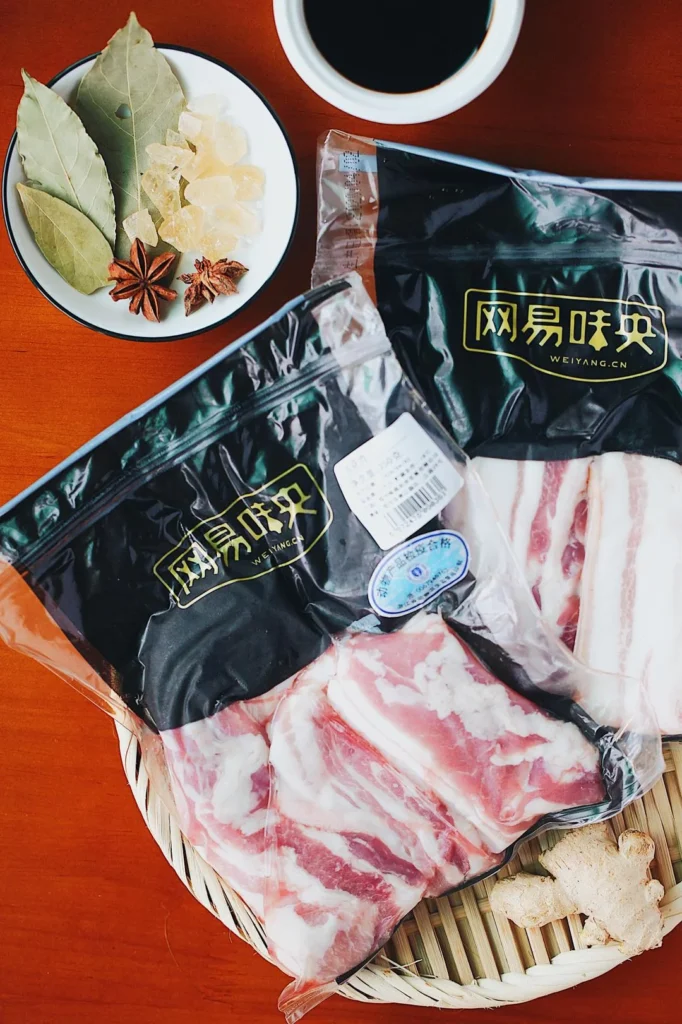
- Prepare all ingredients. If using frozen pork belly, thaw it beforehand. Slice the ginger. Both dark and light soy sauce are types of soy sauce — dark soy adds color while light soy adds flavor. If your household only uses one type, that works too. There are also specialized braising soy sauces available. Keep in mind that different soy sauces vary in color and saltiness, so adjust accordingly. This recipe provides one reliable method.
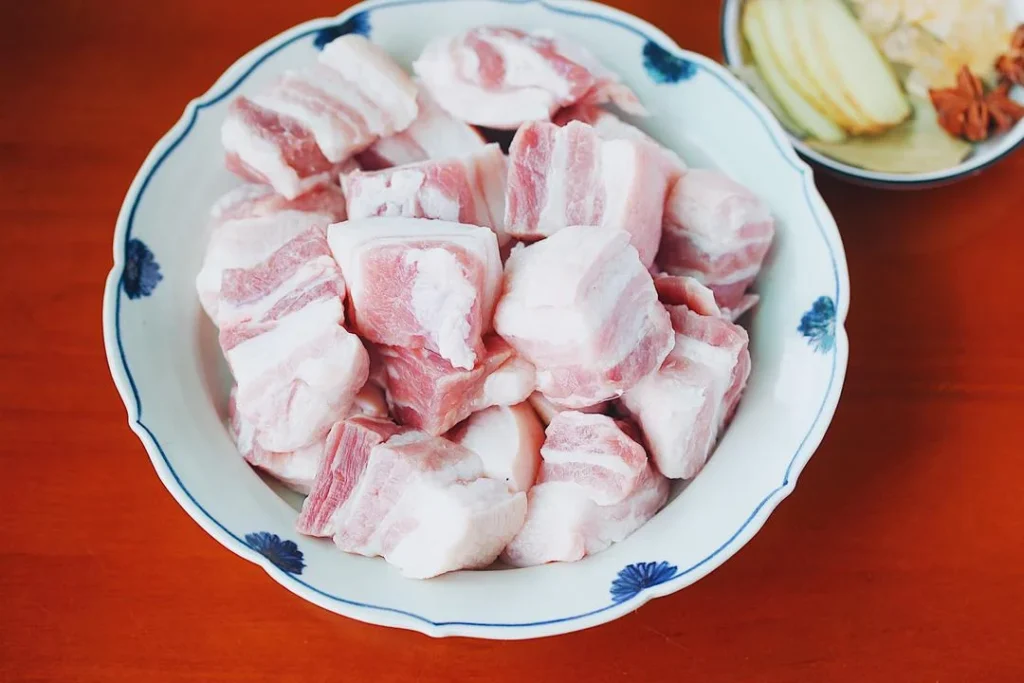
- Choose pork belly with the skin on. Wash it thoroughly, changing the water several times until no more blood seeps out. Pat dry with paper towels. Cut into mahjong-tile-sized pieces. It's a good idea to start boiling a kettle of water now — you'll need boiling water for braising.
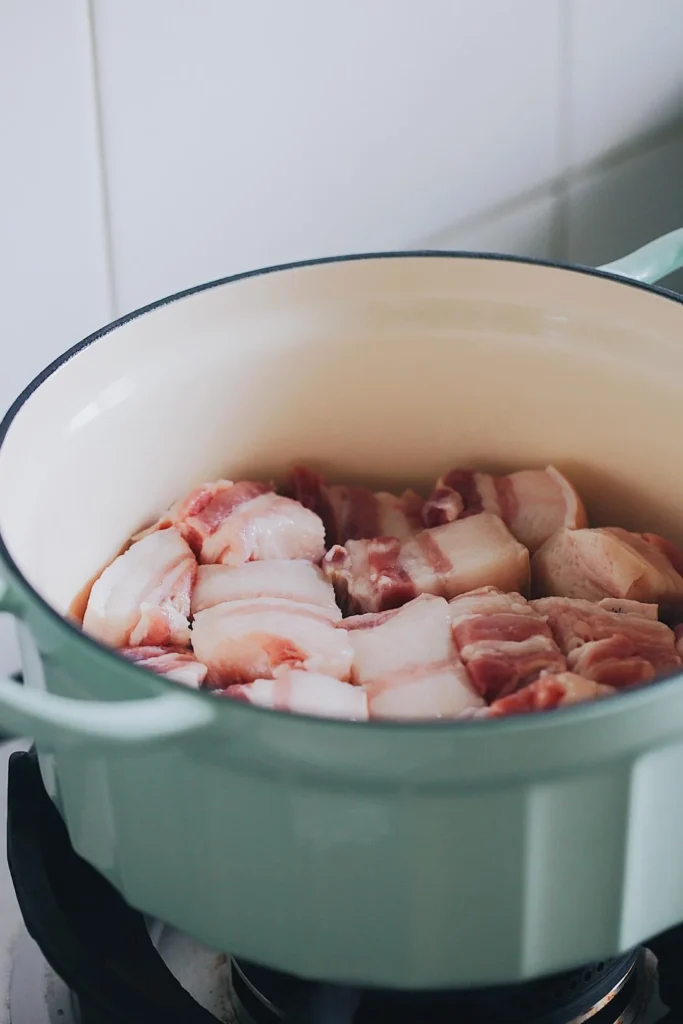
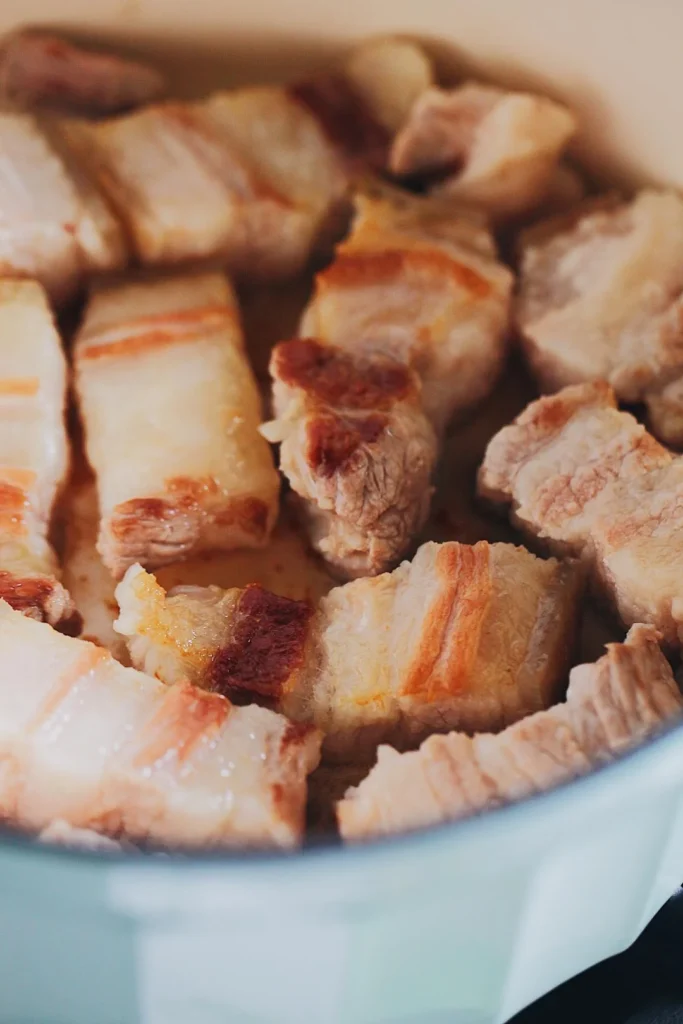
- Heat the wok without any oil. Place the pork belly pieces in, trying not to overlap them so each piece touches the bottom. Don't rush to flip — they'll stick at first. Cook over low heat, and once the fat renders out, they'll release and become easy to turn.
- Keep the heat low and use chopsticks to flip each piece until the surface is lightly golden and the fat has been rendered out. Don't overcook or the meat will become tough. This process is similar to searing a steak in Western cooking — the browning seals in the juices.
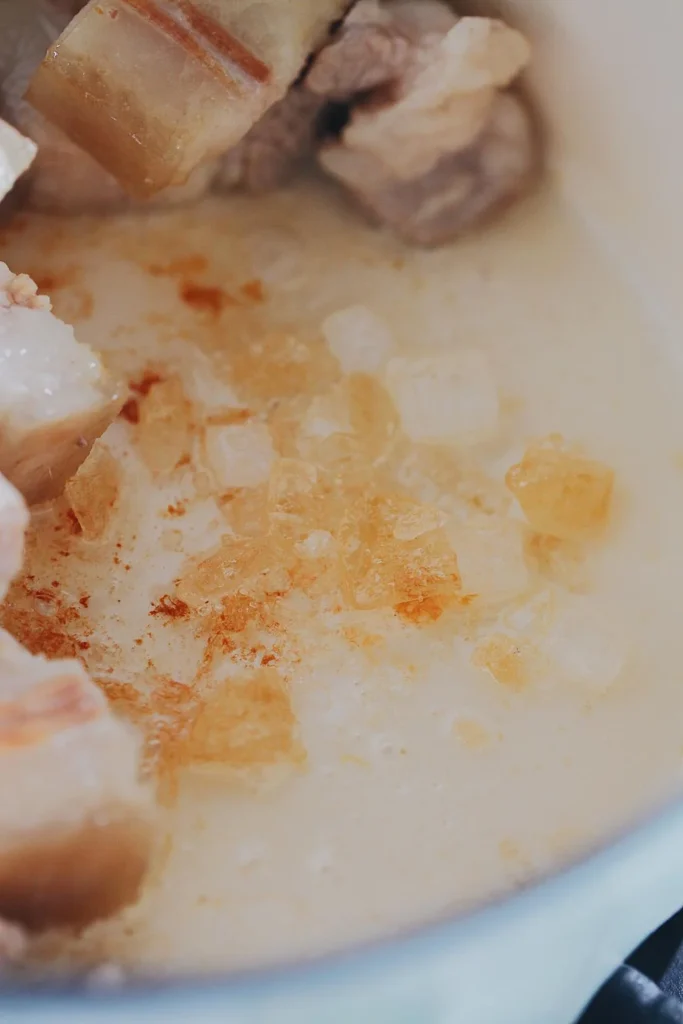
- Add the rock sugar, placing it where there's more oil. Stir briefly over low heat, then toss with all the meat. Use small rock sugar pieces — break larger ones into fragments first or they won't melt easily. This is similar to caramelizing sugar, but not quite the same. For a proper caramel, you'd remove the meat first, melt the sugar in the remaining oil over low heat with constant stirring until it bubbles, then return the meat and toss quickly. Be careful not to overcook the sugar or it will turn bitter. I prefer the simpler method — add sugar directly with the meat in the wok, and the result is just as glossy and richly colored.
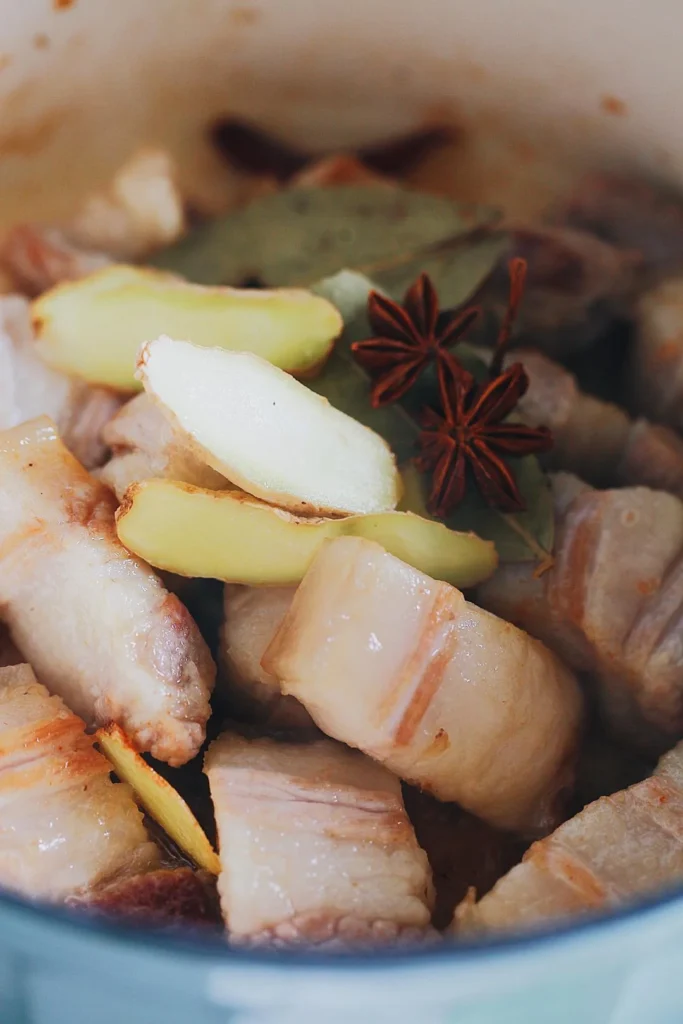
- Once the sugar is mostly melted, add the ginger slices, star anise, bay leaves, and dried chili. Stir a few times. The dried chili is entirely optional, but I find a hint of spiciness helps cut through the richness. Star anise and bay leaves are also optional — some households skip them entirely. I enjoy a touch of warm spice, so I include them, but never too much.
- Pour in the yellow rice wine — Shaoxing Huadiao wine is our family's preference, which is a type of yellow rice wine. Regular cooking wine works if you don't have it. The wine releases wonderful aromas when it hits the hot wok. Then add the dark and light soy sauces. Stir until all the meat pieces are evenly coated.
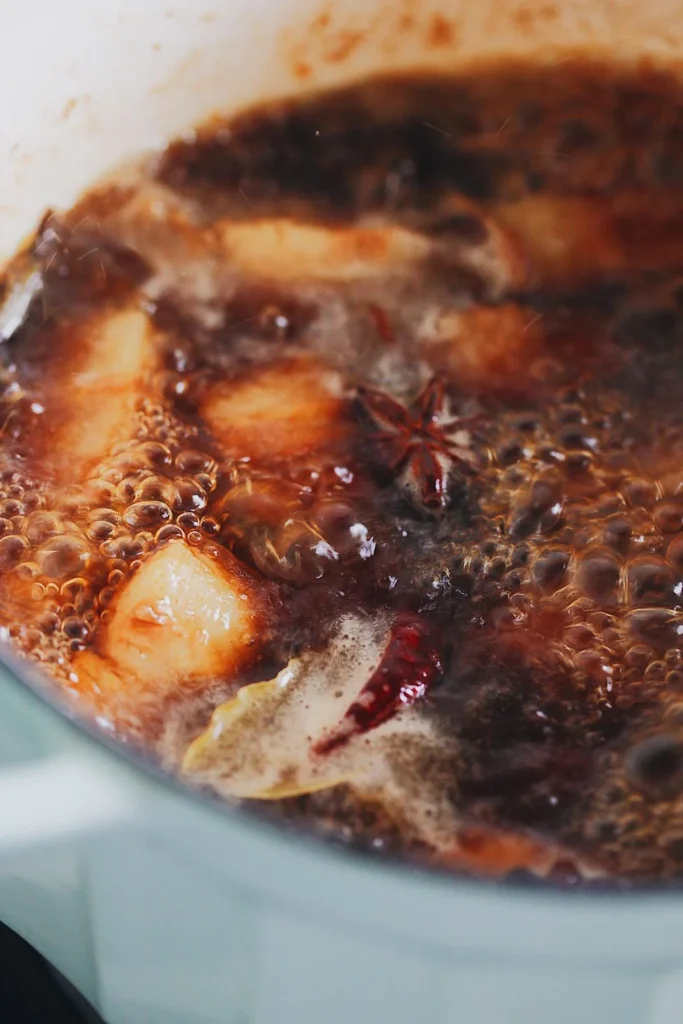
- Pour in boiling water — at least enough to cover the meat. It must be boiling water, never cold. Cold water hitting hot meat causes it to contract rapidly and become tough. After adding the water, bring to a boil over high heat, then reduce to low, cover, and simmer for 40 minutes to 1 hour. Check occasionally — if the liquid runs low but the meat isn't tender yet, add more boiling water.
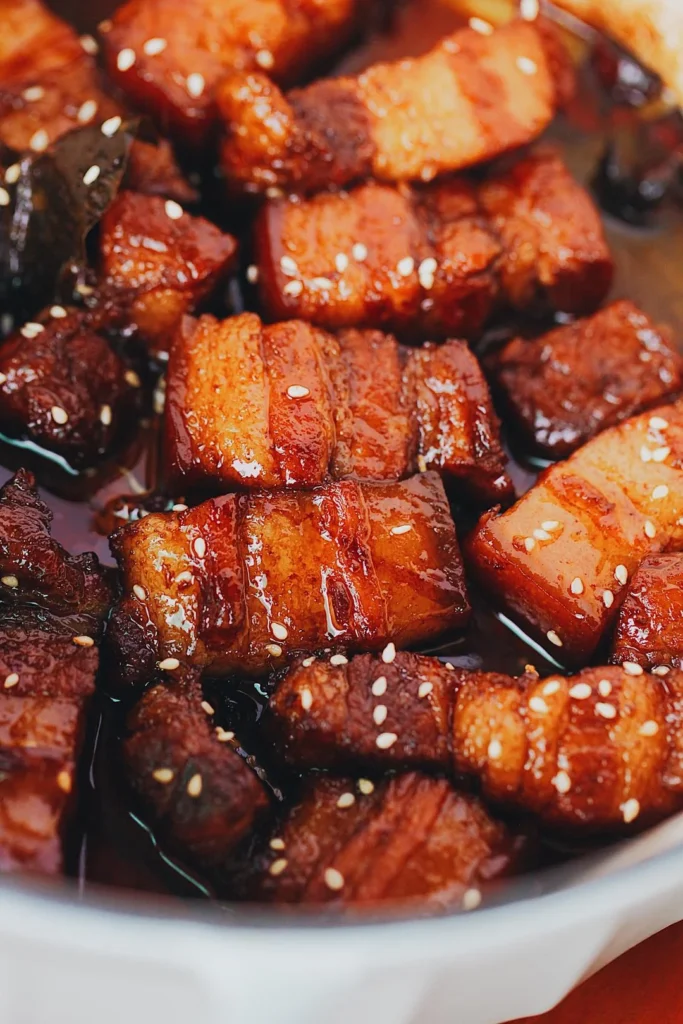
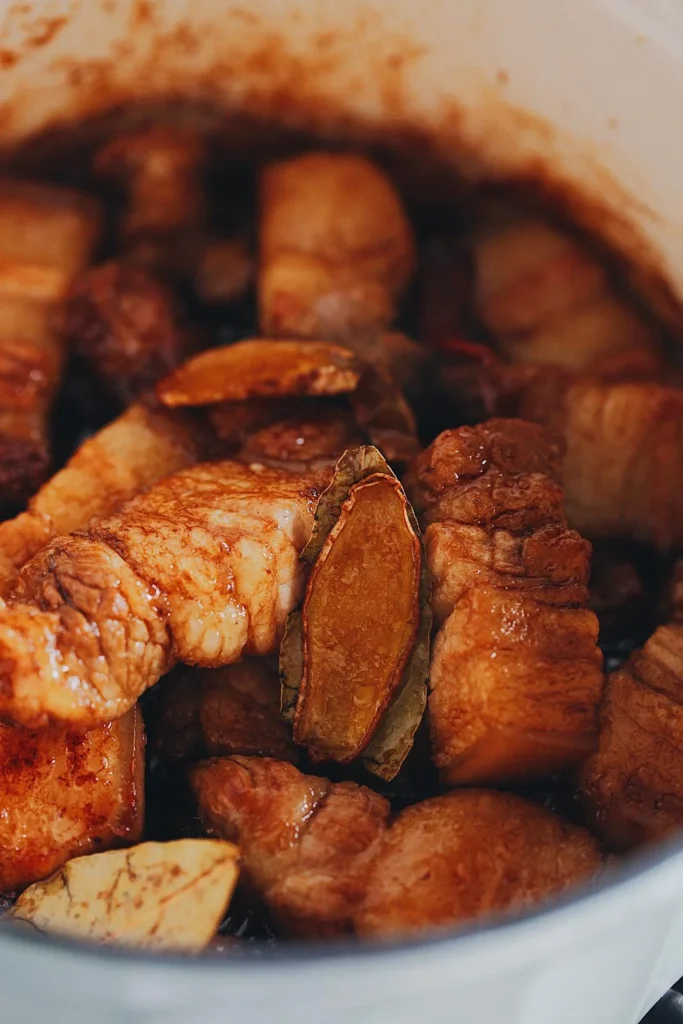
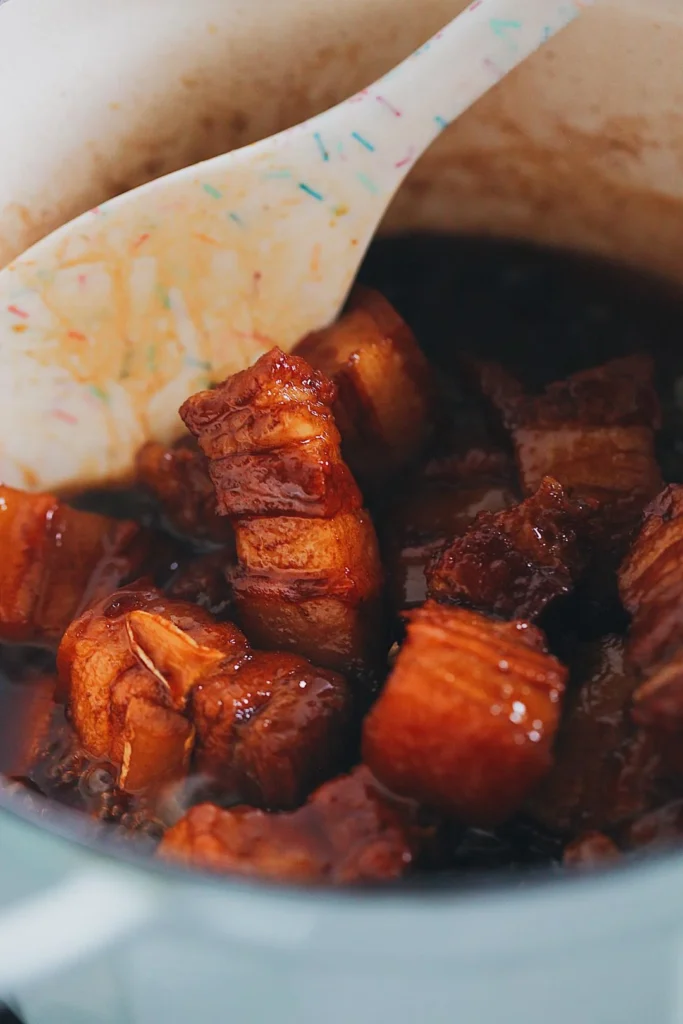
- After sufficient braising time, taste for seasoning and check the meat's texture. If it needs more time, continue simmering. Otherwise, remove the lid and turn up the heat to reduce the sauce. Stir frequently while reducing — the sugar in the sauce will thicken it naturally. More sugar means a thicker final sauce. Reduce until the sauce coats the meat nicely, but don't let it dry out completely. If all the moisture evaporates, you'll be left with just oil and the meat will become dry and tough. The sauce should remain a rich soy-colored glaze. Garnish with sesame seeds for a beautiful presentation.