Guide to Pork Cuts and Cooking Methods
Ingredients
- Pork common cuts and their uses
Instructions
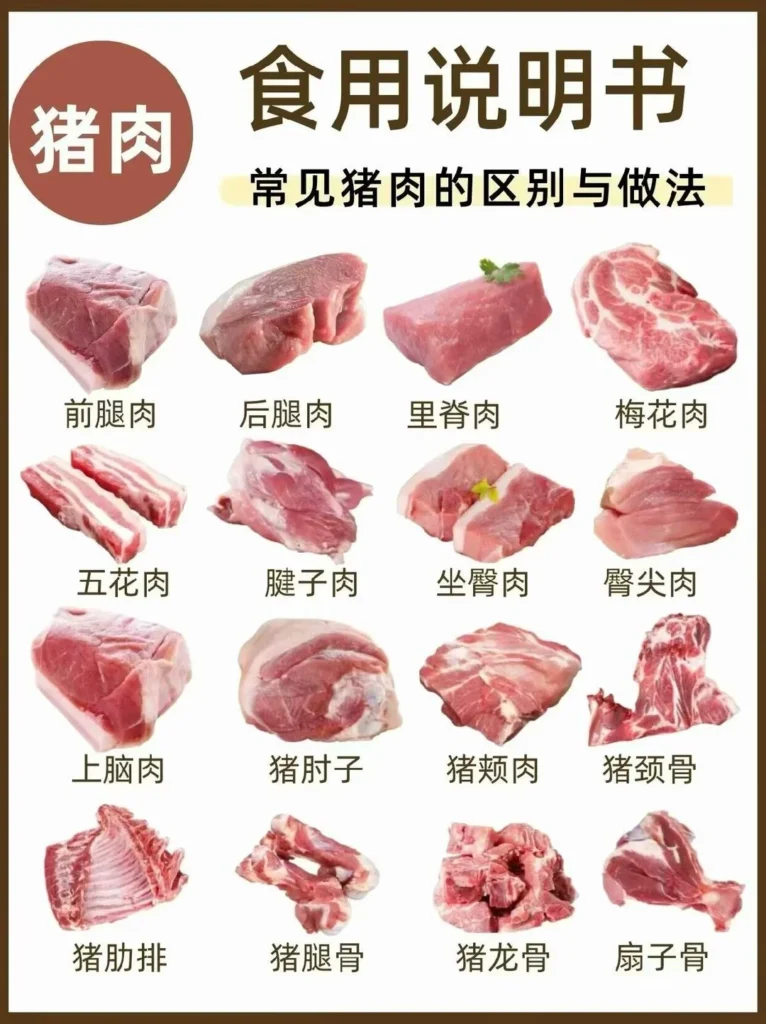
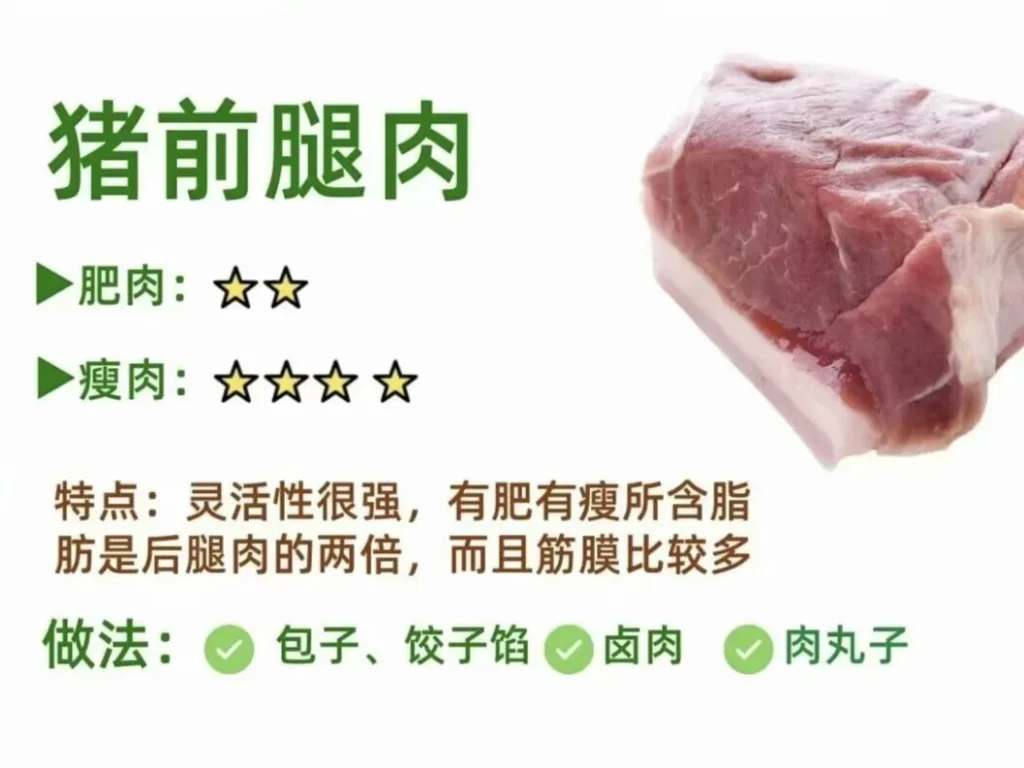
- Pork Foreleg (前腿肉): Ratio of fat to lean is about 50/50. Characteristic: Very versatile, contains both fat and lean meat with twice the fat content of hind leg meat, and more connective tissue. Best for: Dumplings, baozi, braised meat, meatballs.
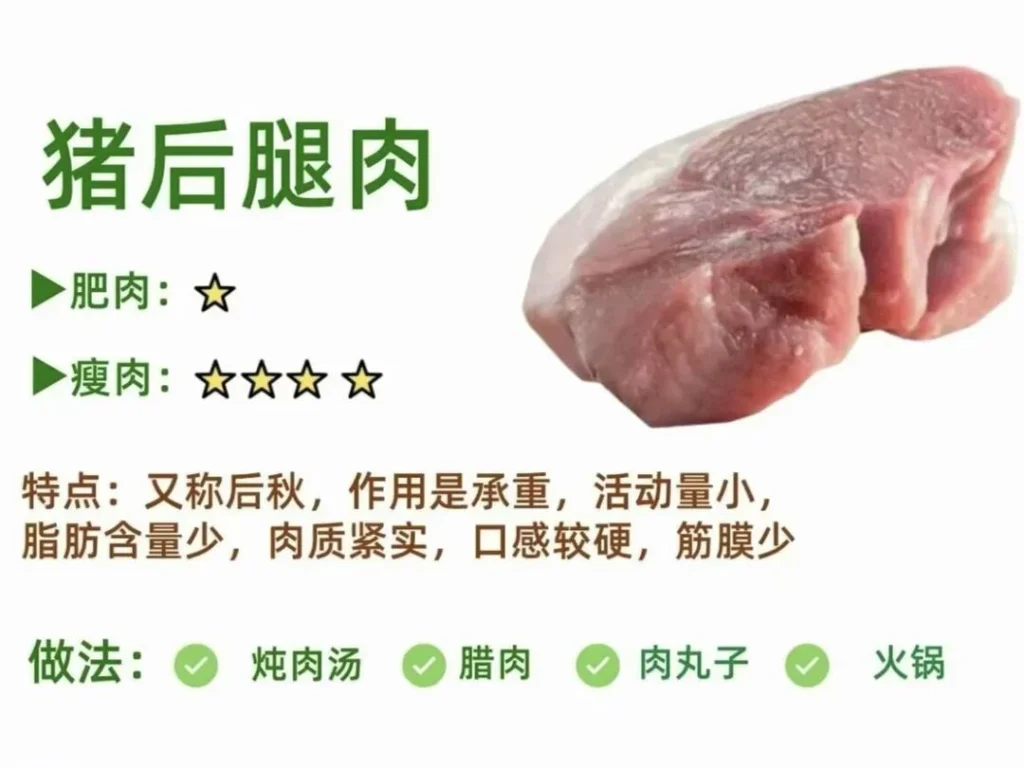
- Pork Hind Leg (后腿肉): Ratio of fat to lean is about 30/70. Characteristic: Also called houqiu, used for weight-bearing so less active, lower fat content, firm texture, slightly tough, less connective tissue. Best for: Meat soups, stir-fried meat, meatballs, hot pot.
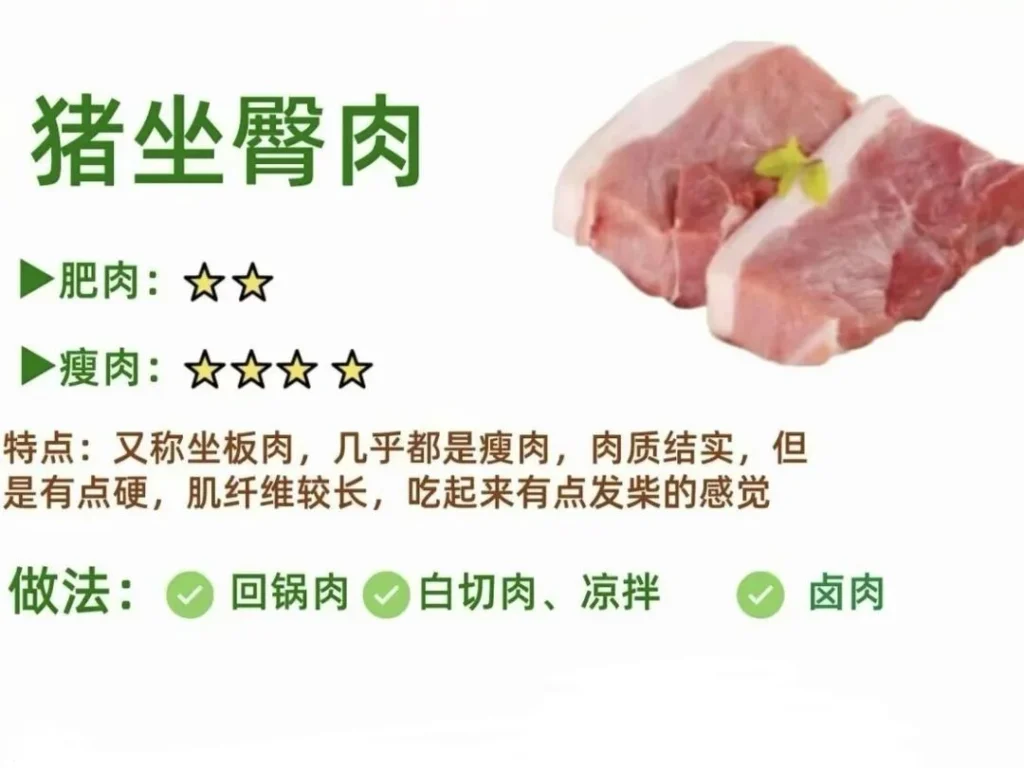
- Pork Sitting Muscle (坐臀肉): Ratio of fat to lean is about 10/90. Characteristic: Also called zuodun meat, almost entirely lean, firm but somewhat tough, long muscle fibers, slightly dry texture. Best for: Twice-cooked pork (回锅肉), white-cut pork, cold dishes, braised pork.
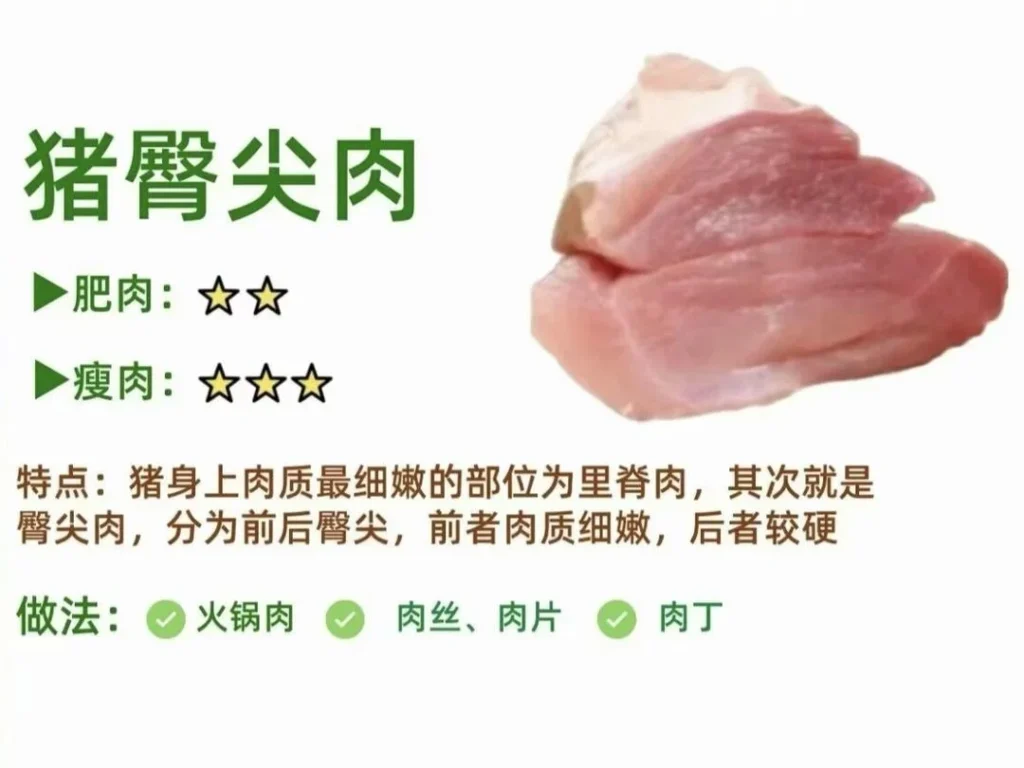
- Pork Rump Tip (臀尖肉): Ratio of fat to lean is about 20/80. Characteristic: The second most tender cut after tenderloin, divided into front and back rump tips — the front is more tender, the back is firmer. Best for: Stir-fried dishes, meat shreds, sliced meat, meat rolls.
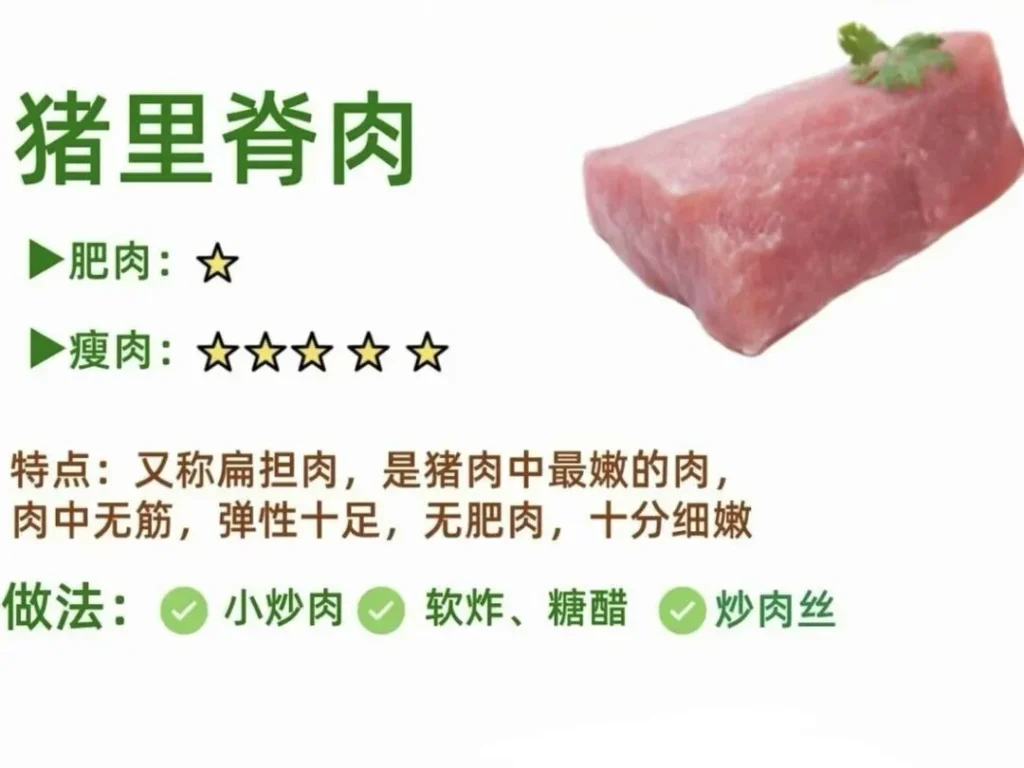
- Pork Tenderloin (里脊肉): Ratio of fat to lean is about 5/95. Characteristic: Also called biandan meat, the most tender cut of pork, boneless, springy, no sinew, extremely fine texture. Best for: Quick stir-fry, deep-fry, sweet and sour, shredded pork.
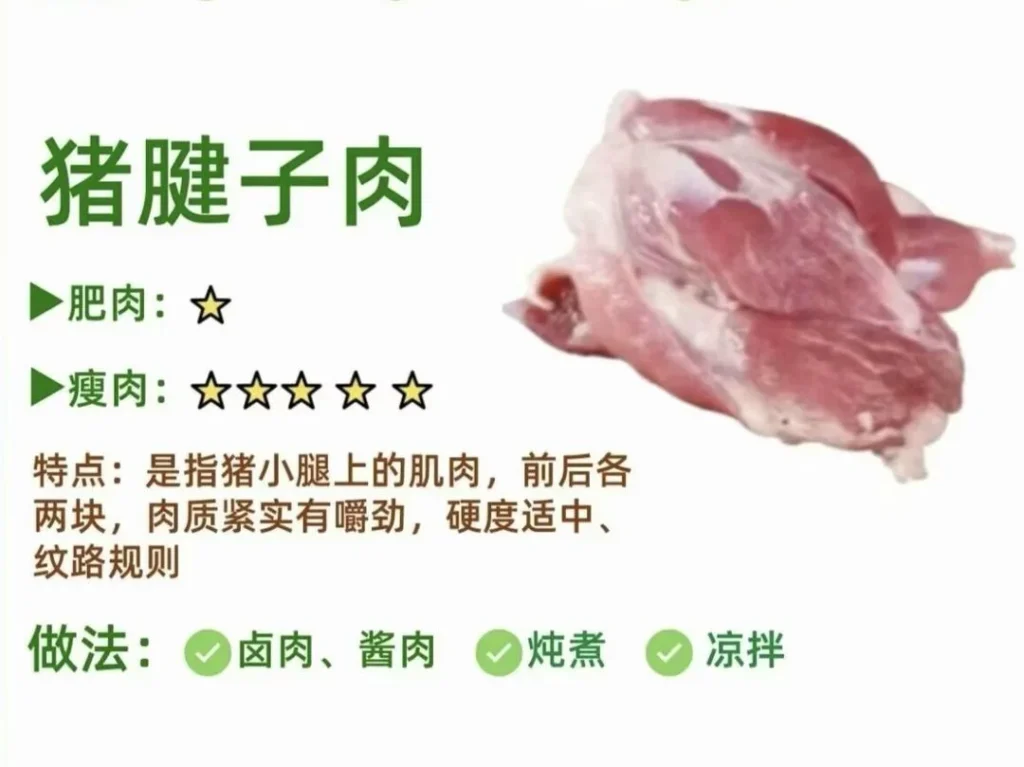
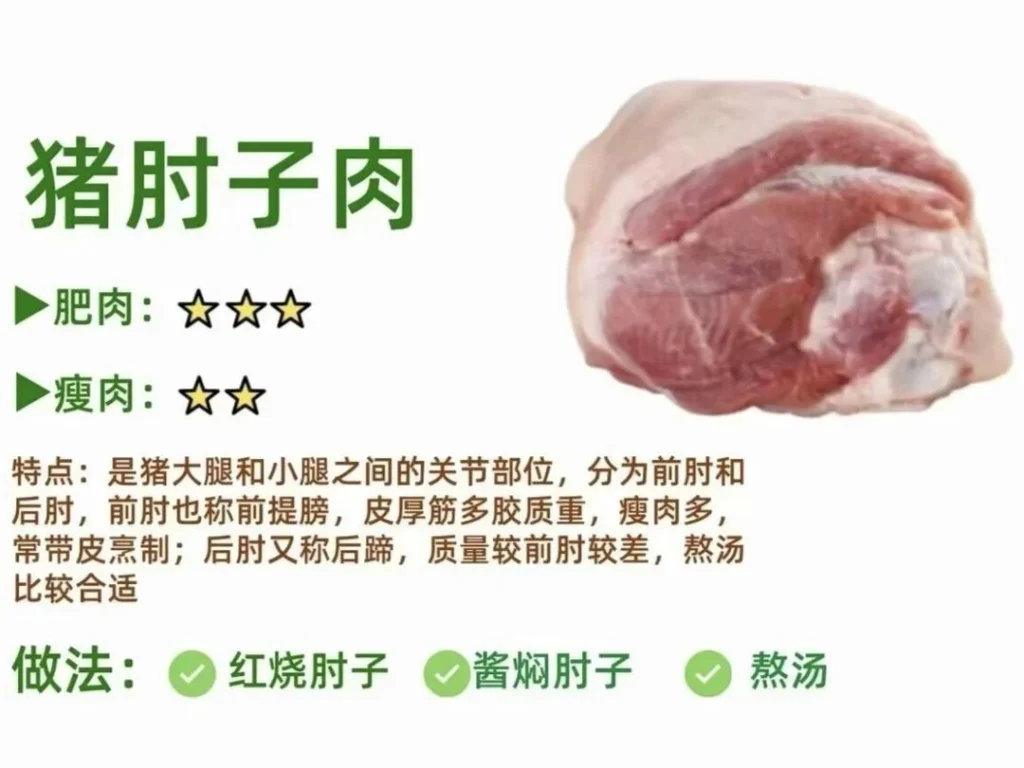
- Pork Shank/Hock (肘子肉): Ratio of fat to lean is about 40/60. Characteristic: Muscle from the lower leg, two pieces on front and back legs, firm with marbling, moderate firmness, regular grain pattern. Best for: Braised pork shank, soy-braised, long stewing, cold dishes.
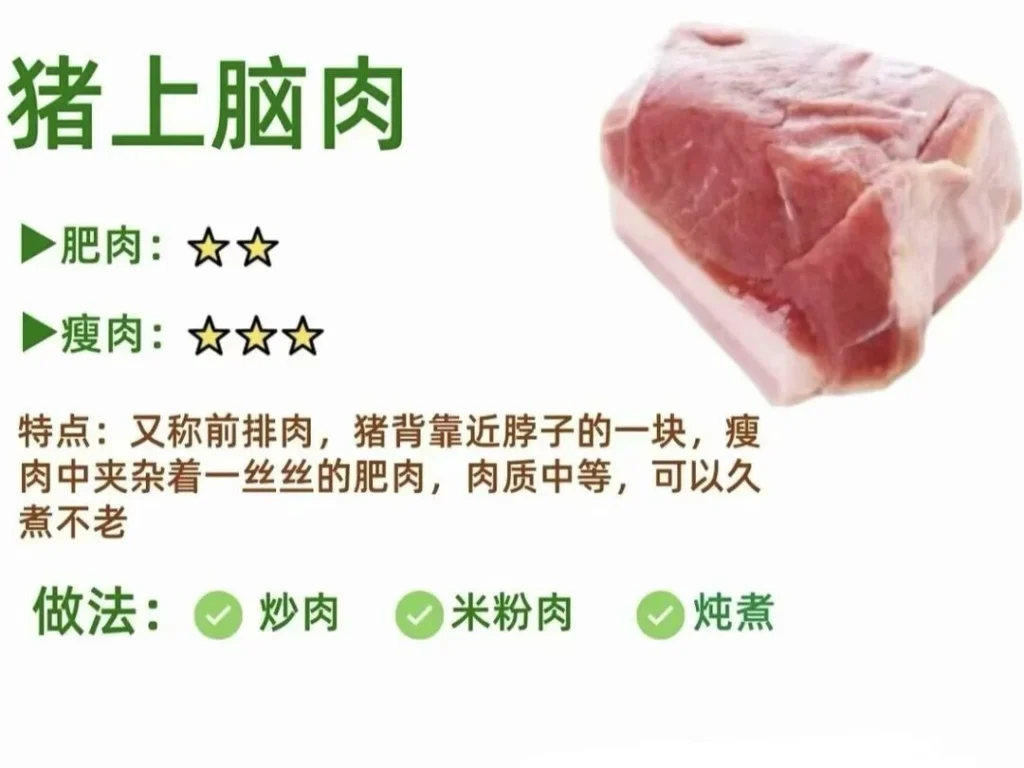
- Pork Shoulder/Neck (上脑肉): Ratio of fat to lean is about 40/60. Characteristic: Also called front rib meat, near the shoulder blade, streaked with threads of fat, medium texture, can withstand long cooking without falling apart. Best for: Stir-fried pork, rice noodle pork, braised dishes.
- Pork Elbow (肘子): Best for: Braised pork elbow, soy-simmered pork elbow, rich soups.
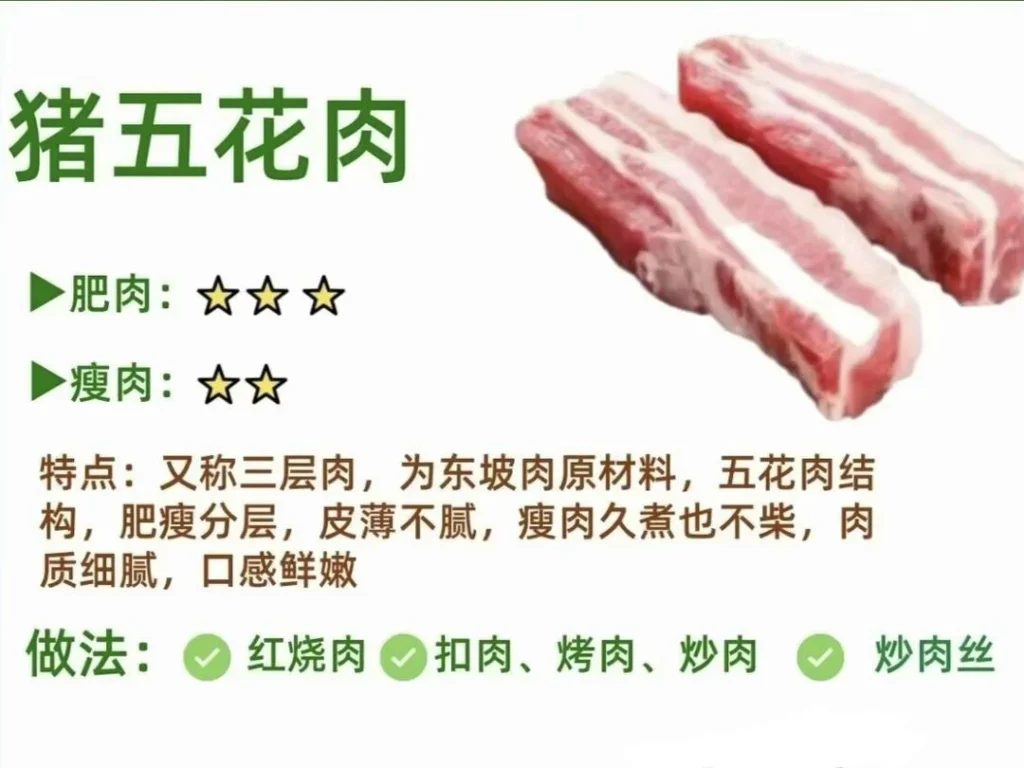
- Pork Belly (五花肉): Characteristic: Also called three-layer meat, the key ingredient for Dongpo pork, with distinct layers of fat and lean, thin skin, lean meat stays tender even after long cooking, fine texture, delicious and succulent. Best for: Braised pork belly, steamed pork with preserved vegetables, roasted pork, stir-fried pork, shredded pork.
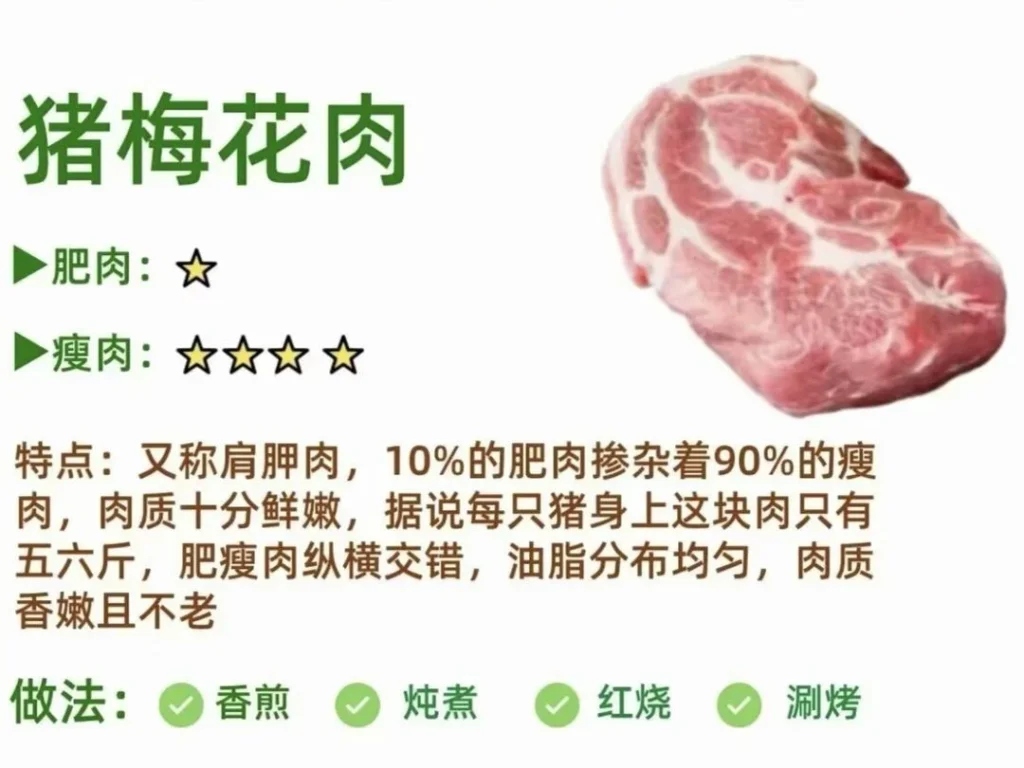
- Pork Collar/Neck (梅花肉): Ratio of fat to lean is about 10/90. Characteristic: Also called shoulder steak, 10% fat marbled with 90% lean, extremely tender, reportedly only about 5-6 jin per pig, fat and lean crisscrossed with even fat distribution, flavorful and never tough. Best for: Pan-fried steak, slow roasting, braised, shabu-shabu.
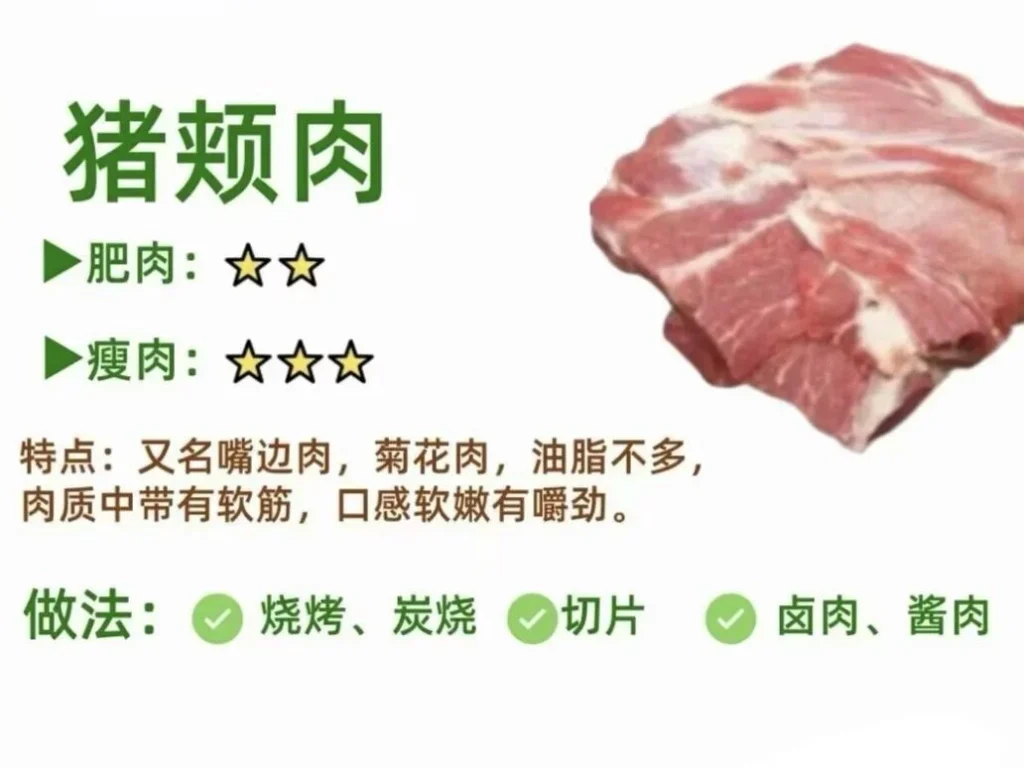
- Pork Jowl/Neck Fat (猪颈肉): Characteristic: Also called roadside meat or chrysanthemum meat, not much fat, contains soft cartilage, soft and chewy texture. Best for: Grilled/barbecued, sliced thin, stir-fried.
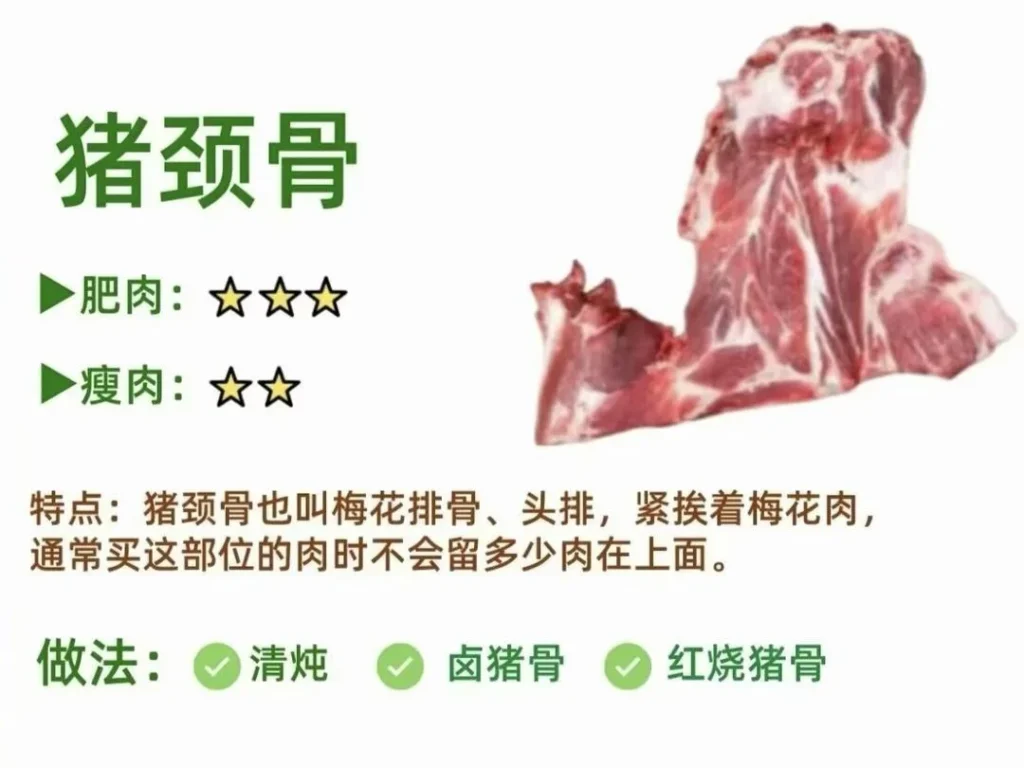
- Pork Neck Bones (猪颈骨): Characteristic: Also called plum blossom ribs or head ribs, close to the collar meat, usually not much meat on the bone when purchased. Best for: Clear soup, pepper ribs, braised ribs.
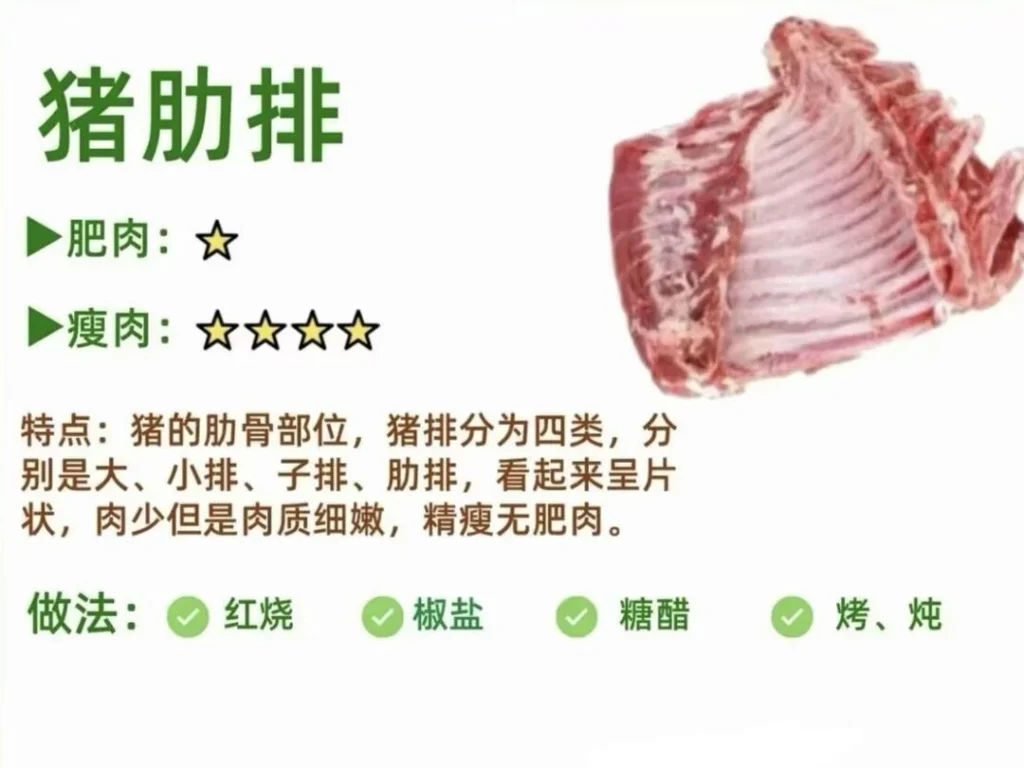
- Pork Ribs (排骨): Best for: Braised, salt-baked, sweet and sour, slow stewed for elders.
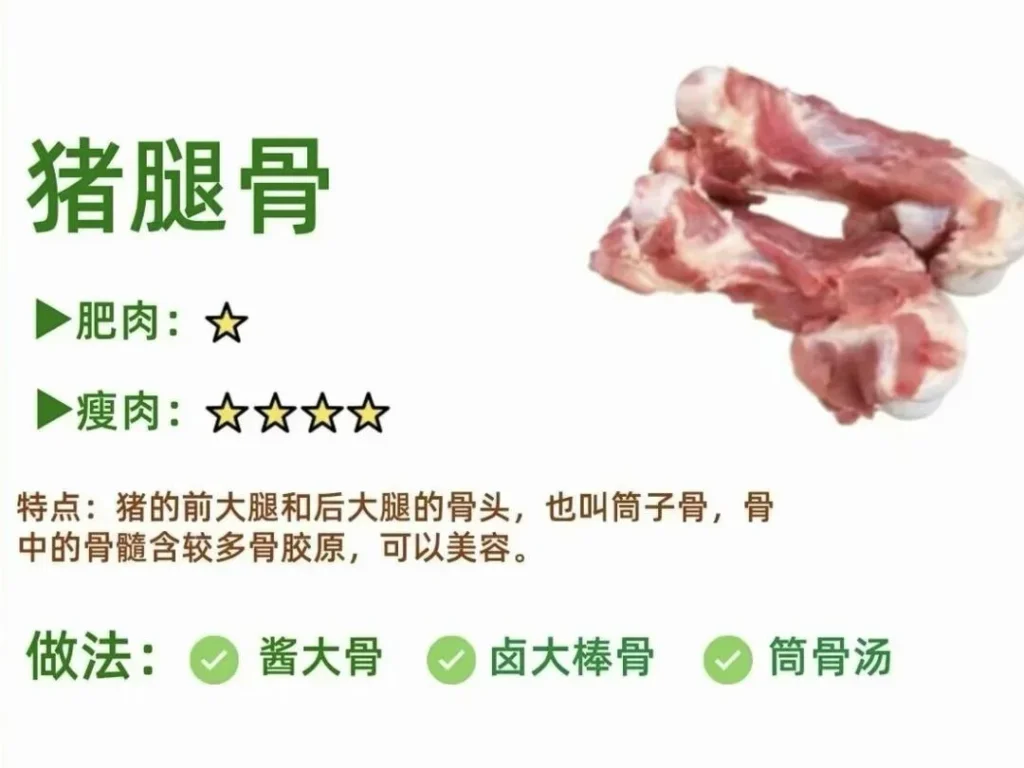
- Pork Leg Bones (猪腿骨): Characteristic: Large bones from front and hind legs, also called tube bones, marrow contains rich collagen, good for skin health. Best for: Roasted marrow bones, braised large bones, bone broth soup.
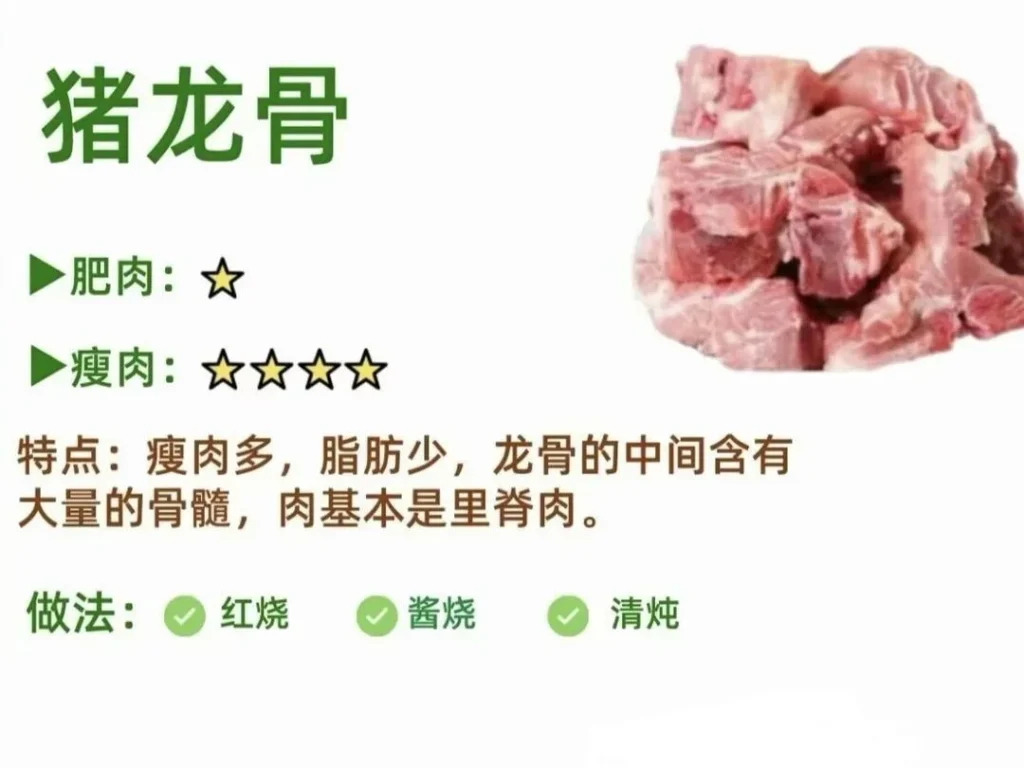
- Pork Spine/Dragon Bones (猪龙骨): Characteristic: More lean meat, less fat, contains large amounts of bone marrow in the center, meat is essentially tenderloin. Best for: Braised, soy-braised, clear soup.
- Pork Shoulder Blade (扇子骨): Characteristic: Flat blade bone with varying amounts of meat attached. Best for: Bone soup, braised, roasted.