
Gallery
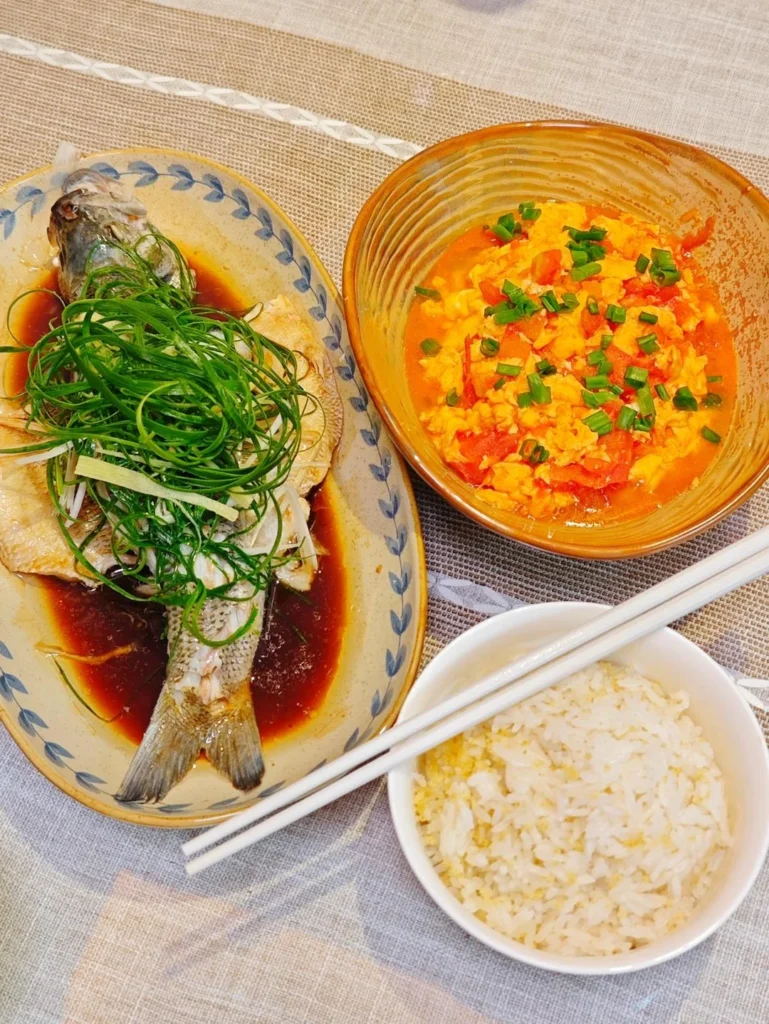
Steamed Sea Bass (Cunlu Style)
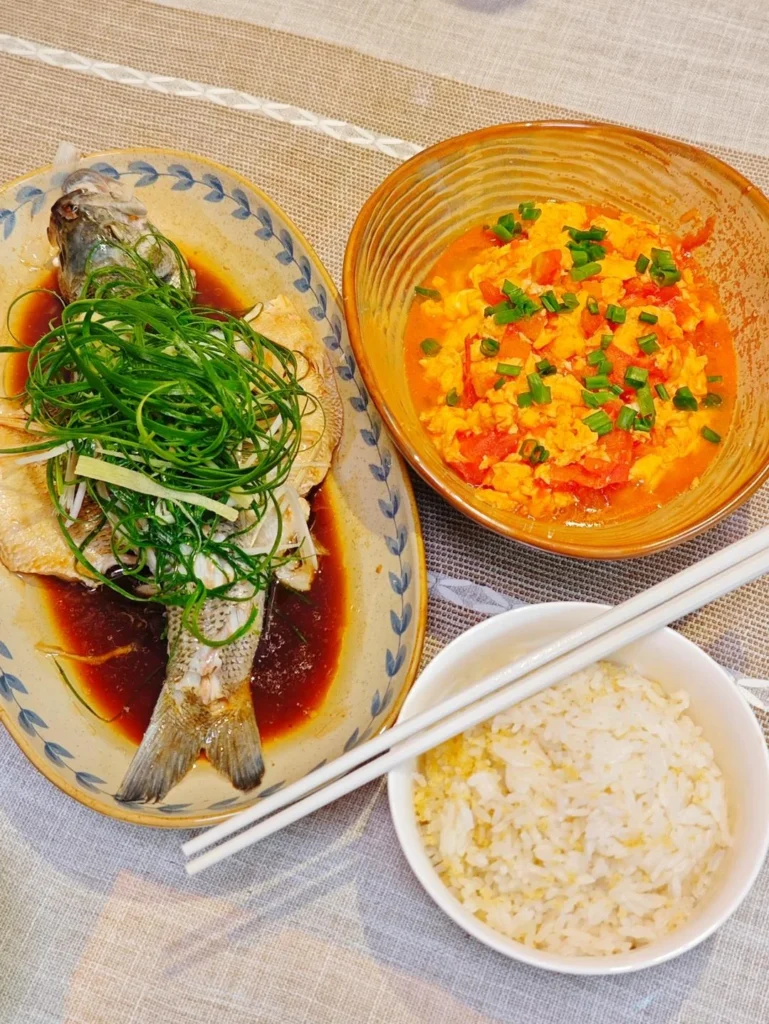
This dish offers a tender and flavorful sea bass with a delicate sweetness that comes from the ginger and light soy sauce while the cornstarch coating provides a subtle crispness. The fresh scallions add a bright green touch that balances the richness of the fish perfectly. It is a simple yet satisfying recipe perfect for […]
- Prep
- 18m
- Cook
- 30m
- Total
- 48m
- Servings
- 2
- Difficulty
- Intermediate
- Spice
- 1/5
- Cuisine
- Chinese
IngredientsWhat you'll need for Steamed Sea Bass (Cunlu Style)
| Ingredient | Amount |
|---|---|
| sea bass | 1, about 500g |
| ginger | 5 slices |
| light soy sauce | 5 tbsp |
| salt | 1 small pinch |
| scallions | 3 stalks |
| cornstarch | 1 small pinch |
- sea bass1, about 500g
- ginger5 slices
- light soy sauce5 tbsp
- salt1 small pinch
- scallions3 stalks
- cornstarch1 small pinch
Cooking StepsHow to cook Steamed Sea Bass (Cunlu Style) step by step
-
 Step 1
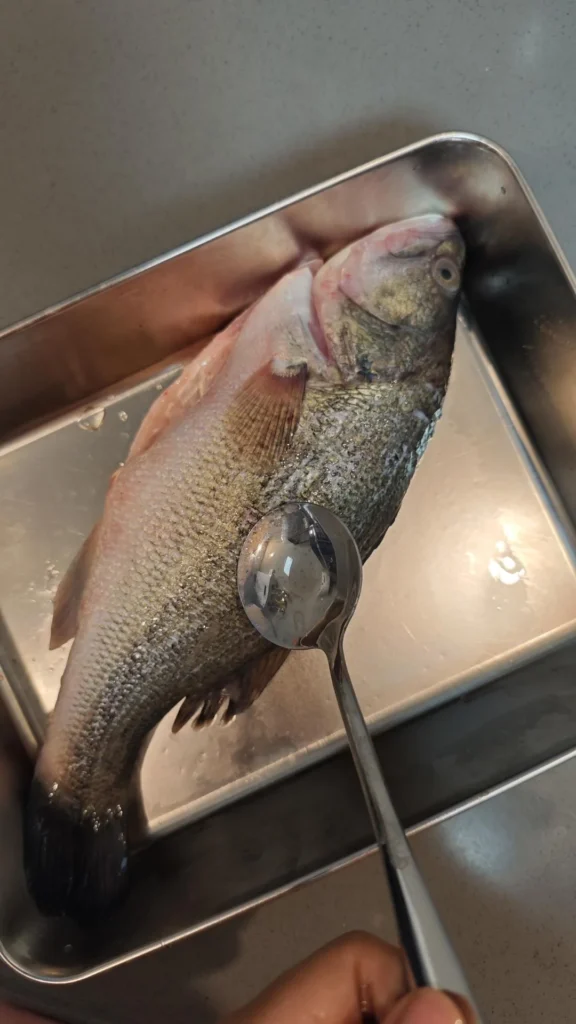
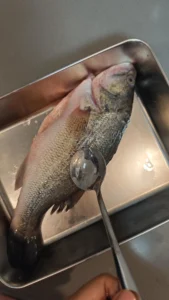
First, use a spoon to scrape off any remaining fish scales and the slimy coating on the skin.
-
 Step 2
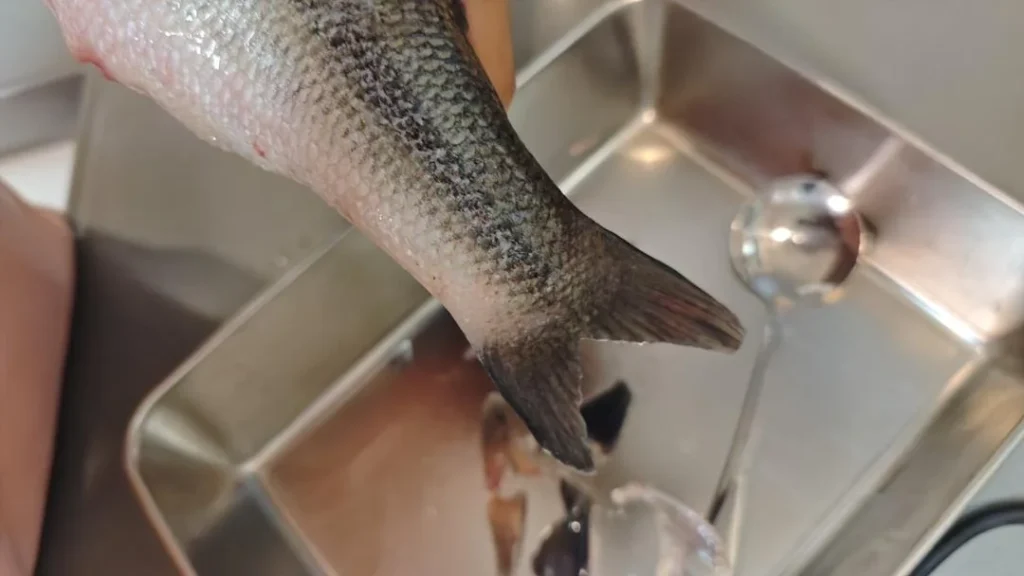
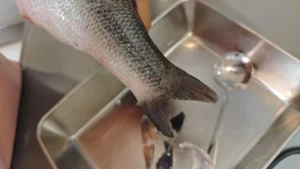
Snip off all the fins. Cut the tail into a swallow-tail shape.
-
 Step 3
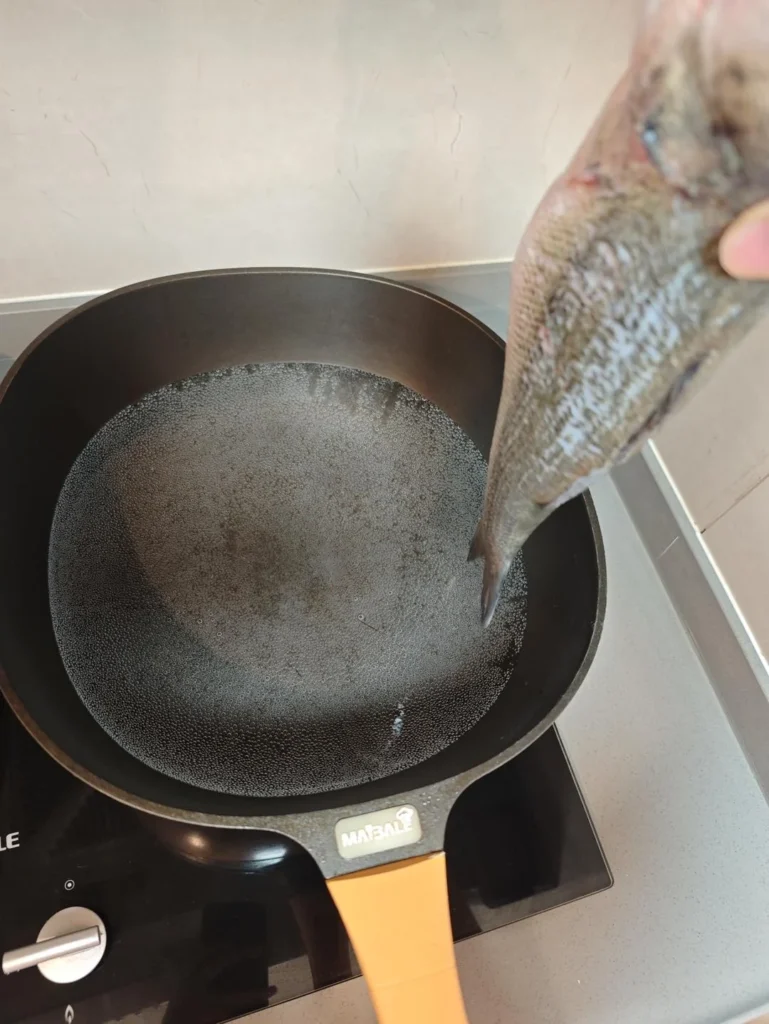
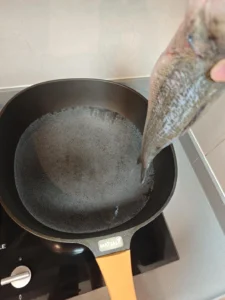
Heat water in a pot. When it’s almost boiling, turn off the heat. Briefly dip the fish — front side in for 3 seconds, then the back side for 3 seconds. This must be extremely quick — you’re just flash-dipping, NOT cooking! This step is crucial for removing the fishy odor. After dipping, you’ll notice shiny silver residue in the pot — that’s the source of the fishiness.
-
 Step 4
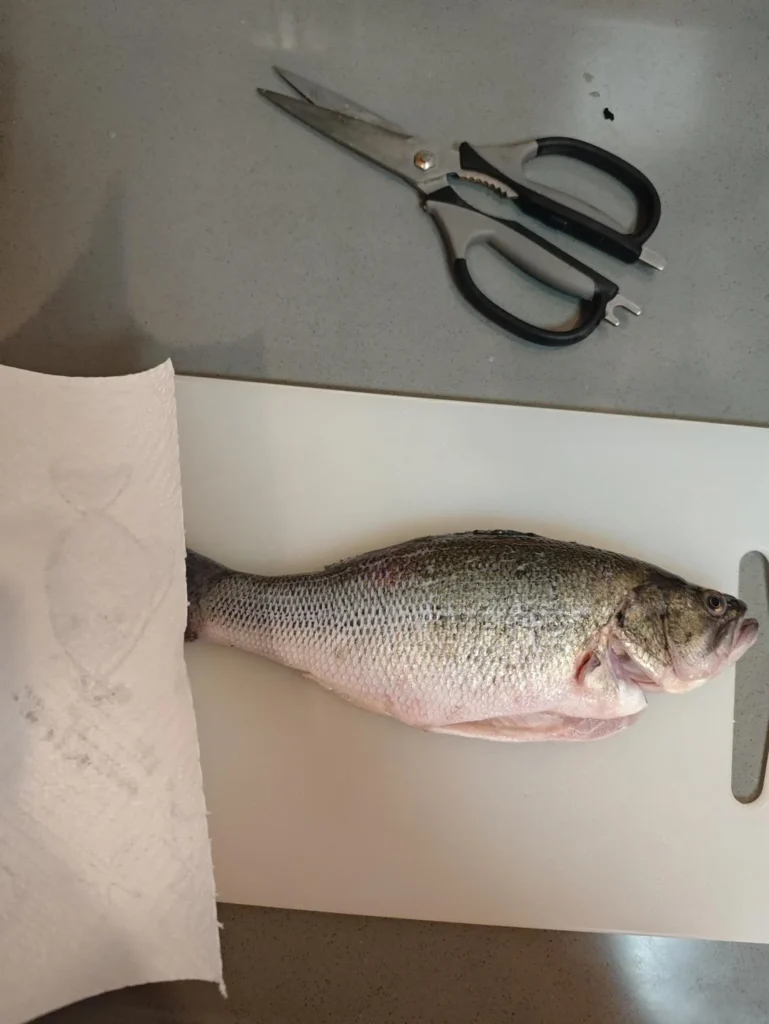
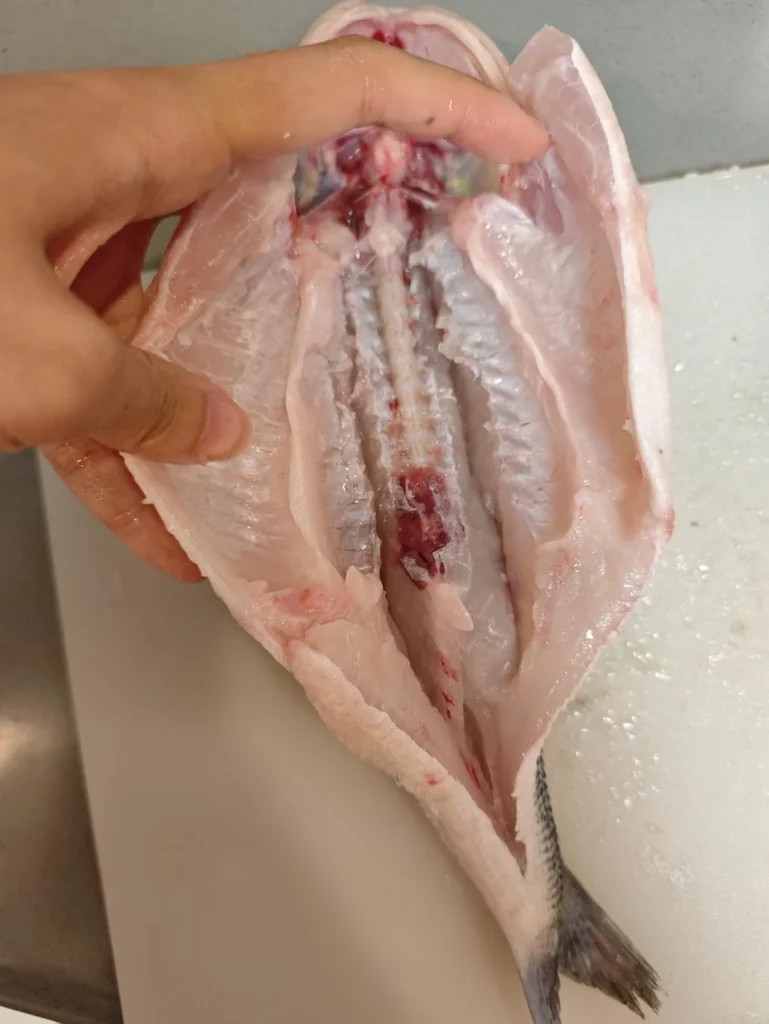
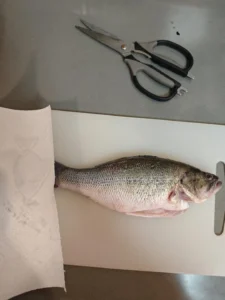
Score the fish: use a knife to cut open the belly further, slicing along the belly bones almost all the way to the tail.
-
 Step 5
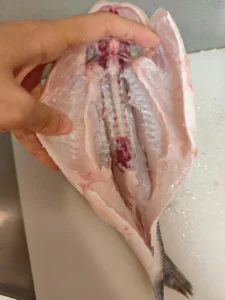
Inside the belly there’s a thin membrane (forgot to photograph). Snip it open with scissors to reveal bones with blood on them — this is very fishy. Rinse thoroughly under running water, scraping with your fingernail until the bones turn white. For the flesh along the bones, insert the tip of the knife and slice backward — don’t cut too deep, about 2/3 of the way through, without cutting through the skin. This can be tricky; the bones alongside are a bit hard, so if you don’t have much hand strength, ask for help.
-
 Step 6
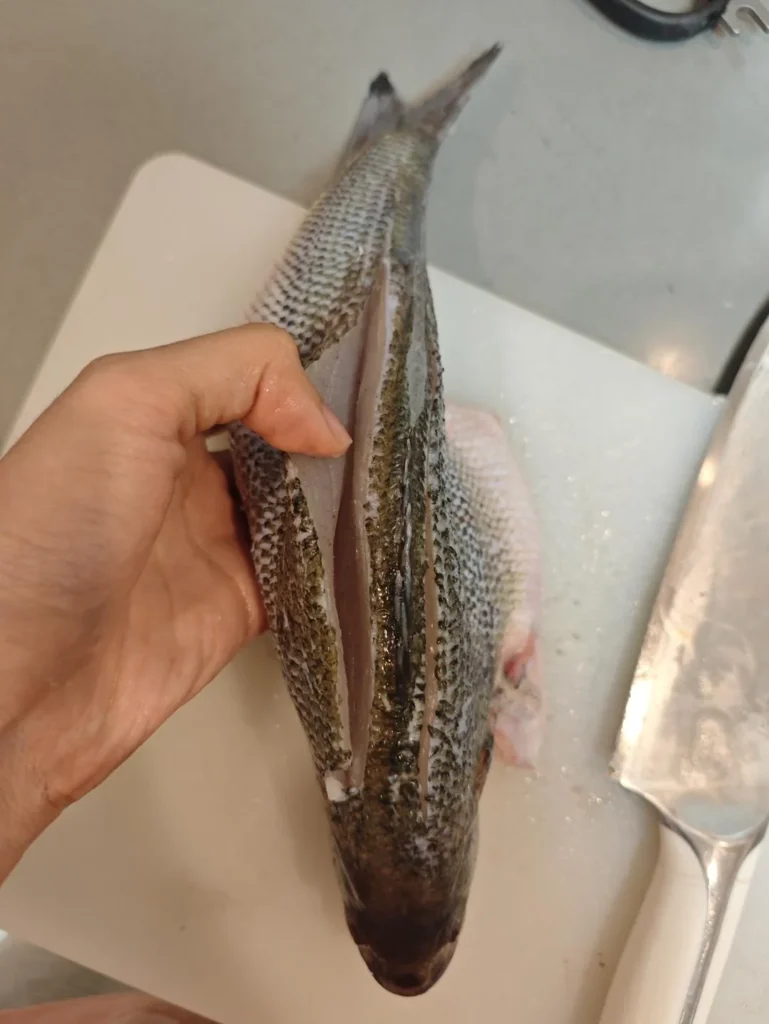
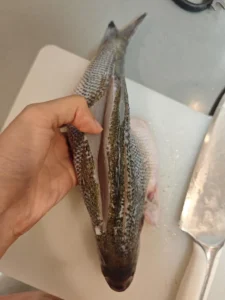
On the back side of the fish, score along both sides of the backbone — not too deep, about 1/3 of the fish’s thickness.
-
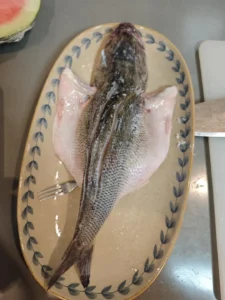 Step 7
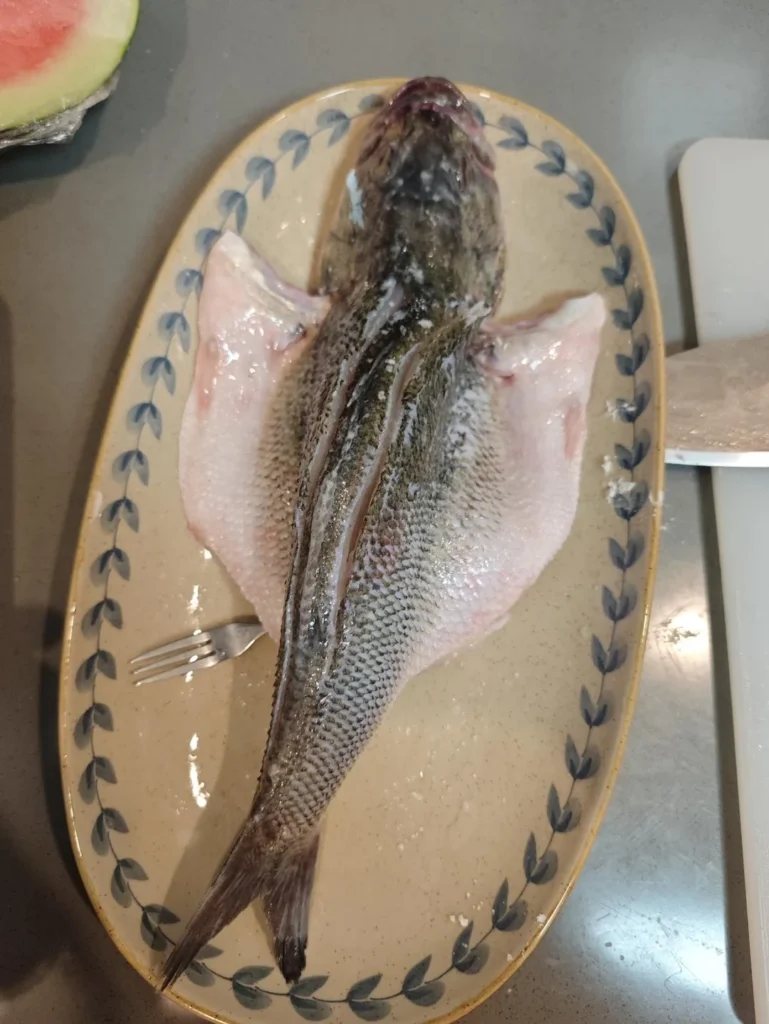
Plate the fish. Place three chopsticks in a triangle underneath (my plate was too narrow so I used fruit forks) — this allows steam to circulate under the fish for even cooking. Rub a small pinch of salt and a small pinch of cornstarch evenly over the fish — the salt gives it a base seasoning, and the cornstarch makes it more tender after steaming (both optional). Prepare the sauce: 6 tbsp light soy sauce, 1 tbsp oyster sauce, 1 tsp sugar, 2 tbsp water — mix well and set aside.
-
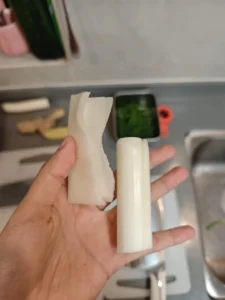 Step 8
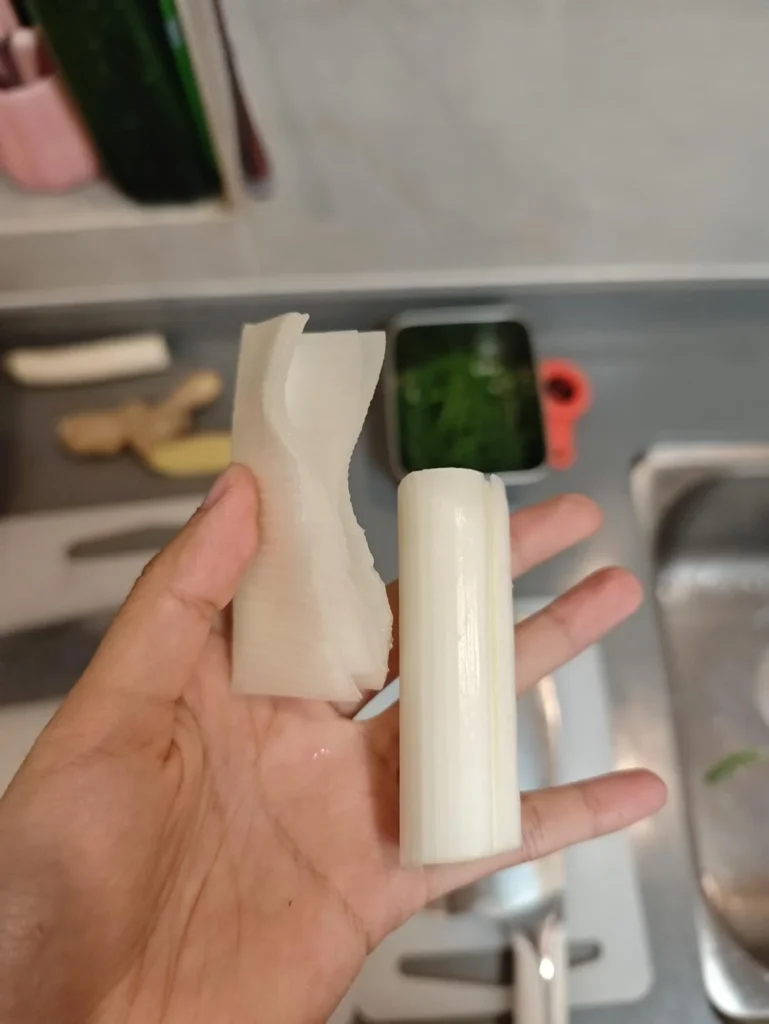
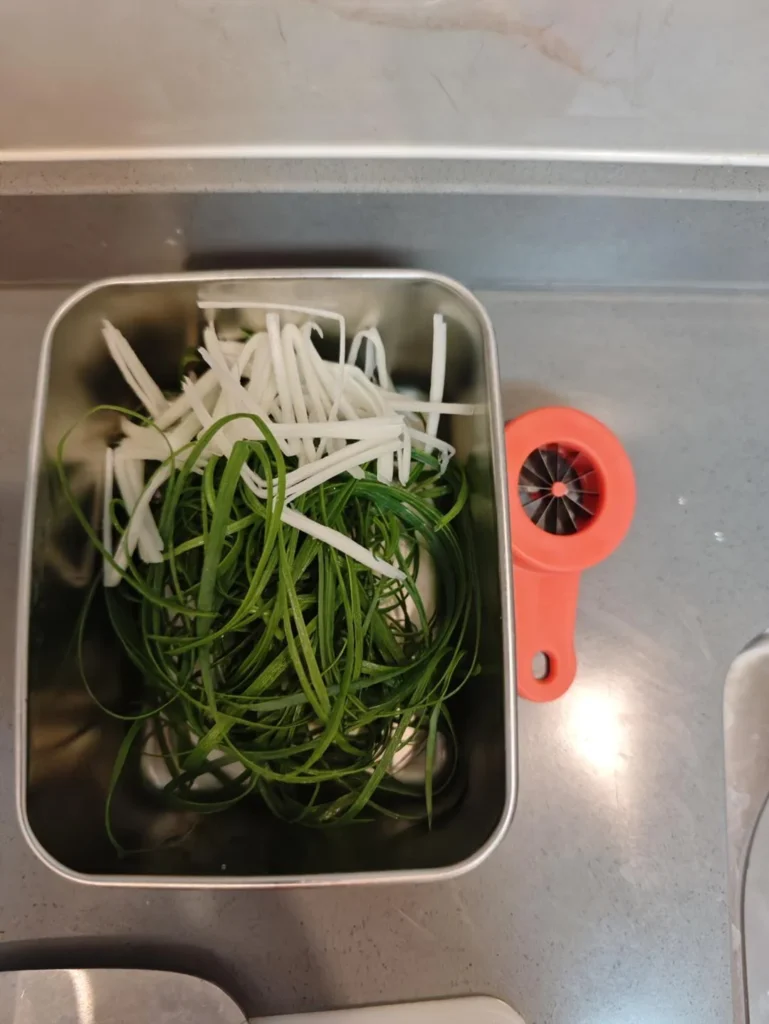
Take a large scallion stalk about a hand’s length. Slice it open without cutting all the way through, then separate into 3 layers, fold, and julienne.
-
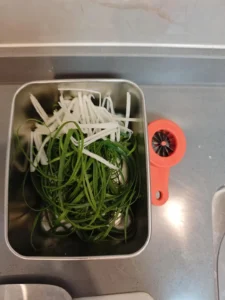 Step 9
Julienne 2 small scallions using a julienne tool. Cut 1 slice of ginger into fine threads — these are for the hot oil pour. (The original video also added green/red pepper strips and onion strips for better appearance and aroma, but for home cooking they’re optional.) Additionally, prepare 4 ginger slices and a section of scallion cut into pieces. Insert 2 ginger slices into the scoring cuts on the fish’s back, and place the rest of the ginger and scallion on top of the fish.
-
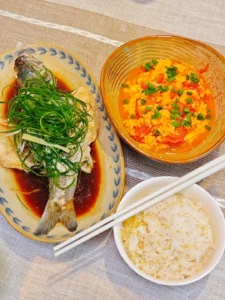 Step 10
Now steam the fish: bring water to a vigorous boil, place the fish on top, cover, and steam for 6 minutes. Do NOT open the lid during steaming! After 6 minutes, turn off the heat and let it sit covered for 2 more minutes. Then open and remove the ginger and scallion from the fish, and discard the steaming liquid from the plate. Place 2/3 of the julienned scallion and ginger on the fish. Heat cooking oil (about the amount you’d use for stir-frying, covering 2/3 of the wok bottom) until very hot, then pour it over the scallion threads. The scallions will wilt. Top with the remaining 1/3 of fresh scallion threads for a nicer presentation. Finally, pour the prepared sauce along the edge of the plate — not directly on the fish — since you’ll pick up the fish and dip it into the sauce as you eat.
Steamed Sea Bass (Cunlu Style)
This dish offers a tender and flavorful sea bass with a delicate sweetness that comes from the ginger and light soy sauce while the cornstarch coating provides a subtle crispness. The fresh scallions add a bright green touch that balances the richness of the fish perfectly. It is a simple yet satisfying recipe perfect for […]
Ingredients
- 1, about 500g sea bass
- 5 slices ginger
- 5 tbsp light soy sauce
- 1 small pinch salt
- 3 stalks scallions
- 1 small pinch cornstarch
Instructions
-
First, use a spoon to scrape off any remaining fish scales and the slimy coating on the skin.
-
Snip off all the fins. Cut the tail into a swallow-tail shape.
-
Heat water in a pot. When it’s almost boiling, turn off the heat. Briefly dip the fish — front side in for 3 seconds, then the back side for 3 seconds. This must be extremely quick — you’re just flash-dipping, NOT cooking! This step is crucial for removing the fishy odor. After dipping, you’ll notice shiny silver residue in the pot — that’s the source of the fishiness.
-
Score the fish: use a knife to cut open the belly further, slicing along the belly bones almost all the way to the tail.
-
Inside the belly there’s a thin membrane (forgot to photograph). Snip it open with scissors to reveal bones with blood on them — this is very fishy. Rinse thoroughly under running water, scraping with your fingernail until the bones turn white. For the flesh along the bones, insert the tip of the knife and slice backward — don’t cut too deep, about 2/3 of the way through, without cutting through the skin. This can be tricky; the bones alongside are a bit hard, so if you don’t have much hand strength, ask for help.
-
On the back side of the fish, score along both sides of the backbone — not too deep, about 1/3 of the fish’s thickness.
-
Plate the fish. Place three chopsticks in a triangle underneath (my plate was too narrow so I used fruit forks) — this allows steam to circulate under the fish for even cooking. Rub a small pinch of salt and a small pinch of cornstarch evenly over the fish — the salt gives it a base seasoning, and the cornstarch makes it more tender after steaming (both optional). Prepare the sauce: 6 tbsp light soy sauce, 1 tbsp oyster sauce, 1 tsp sugar, 2 tbsp water — mix well and set aside.
-
Take a large scallion stalk about a hand’s length. Slice it open without cutting all the way through, then separate into 3 layers, fold, and julienne.
-
Julienne 2 small scallions using a julienne tool. Cut 1 slice of ginger into fine threads — these are for the hot oil pour. (The original video also added green/red pepper strips and onion strips for better appearance and aroma, but for home cooking they’re optional.) Additionally, prepare 4 ginger slices and a section of scallion cut into pieces. Insert 2 ginger slices into the scoring cuts on the fish’s back, and place the rest of the ginger and scallion on top of the fish.
-
Now steam the fish: bring water to a vigorous boil, place the fish on top, cover, and steam for 6 minutes. Do NOT open the lid during steaming! After 6 minutes, turn off the heat and let it sit covered for 2 more minutes. Then open and remove the ginger and scallion from the fish, and discard the steaming liquid from the plate. Place 2/3 of the julienned scallion and ginger on the fish. Heat cooking oil (about the amount you’d use for stir-frying, covering 2/3 of the wok bottom) until very hot, then pour it over the scallion threads. The scallions will wilt. Top with the remaining 1/3 of fresh scallion threads for a nicer presentation. Finally, pour the prepared sauce along the edge of the plate — not directly on the fish — since you’ll pick up the fish and dip it into the sauce as you eat.